 orywire
News that matters globallyReporting on public life and major developments across the U.S., the UK, and beyond.
orywireIran’s World Cup team remains based in Tijuana under U.S. travel restrictions tied to its Group G matches. Officials say the rules remain in place for now, but arrangements for Iran’s final group match in Seattle may still be reviewed.

Iran’s World Cup travel restrictions remain in place before its Sunday match against Belgium in Los Angeles. The team is based in Tijuana, Mexico, and U.S. officials say Iran’s arrangements are still being reviewed for its final Group G match against Egypt in Seattle.
Iran has been using Tijuana as its tournament base while crossing into the United States for group games. Reuters and the Associated Press reported that travel and visa restrictions have shaped how the team moves in and out of U.S. match cities.
The team had originally been linked with Tucson, Arizona, before moving its base to Tijuana. Andrew Giuliani, executive director of the White House FIFA World Cup task force, told Reuters that the move shortened Iran’s travel time to Los Angeles.
The arrangement puts Iran close to Southern California, but it also requires border and immigration processing around match windows. AP reported that Iran captain Mehdi Taremi said the trip from Tijuana to the Los Angeles area before the opener took about five hours when security and immigration checks were included.
The restriction described by U.S. officials is not a blanket ban on Iran playing in the United States. Giuliani has said all Iran players and coaches received visas. Some team officials, however, have not received U.S. visas.
Under the arrangement Giuliani described to AP, the team can enter the United States the day before a match and is expected to leave the evening the match ends. Reuters reported that Iran must travel to venues within 24 hours of its fixtures and return directly to Tijuana after games.
For Sunday’s Belgium match, Giuliani told Reuters that the current plan remained for Iran to fly back to Tijuana after the game. He also said U.S. officials would discuss what the arrangement should look like for Iran’s third group match.
Iran opened Group G with a 2-2 draw against New Zealand in Los Angeles, then returned to Mexico after the match. The travel issue became more visible after Iran said it expected more recovery time in California before going back to its base.
Iran’s next match is Belgium vs. IR Iran at Los Angeles Stadium in Inglewood on Sunday, June 21. FIFA’s official event listing identifies it as Match 39 in the group stage.
Iran’s final scheduled group match is Egypt vs. IR Iran at Seattle Stadium on Friday, June 26. That game is the one U.S. officials have said may be reviewed differently, although no final change had been announced by the latest check.
The schedule matters because Iran is preparing from a base outside the United States while two of its group matches are in U.S. cities. For Belgium, the team pushed to arrive earlier in Los Angeles, but the request was denied, AP reported.
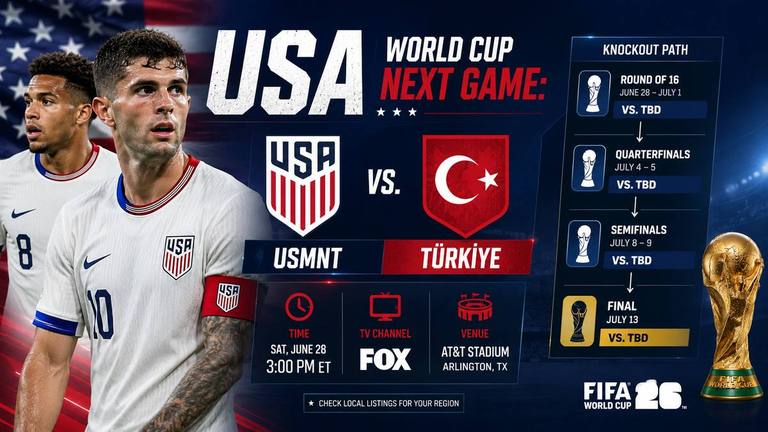
The United States plays Türkiye on Thursday, June 25, at 10 p.m. ET in its final World Cup Group D match. The USMNT has already won the group and is set for a Round of 32 match on July 1.

Belgium and Iran meet Sunday in a FIFA World Cup 2026 Group G match at Los Angeles Stadium. Kickoff is set for 3 p.m. ET, with English-language coverage listed on FS1 and streaming options through FOX One and FOX Sports.
Iranian officials say the rules leave the team with less time to train, recover and handle normal tournament operations. The Iranian federation has said it would lodge a complaint with FIFA over the conditions.
Coach Amir Ghalenoei sharpened that criticism before the Belgium match. Reuters reported that he said Iran had less than 16 hours to prepare and had to cut training short, compared with 24 hours before the New Zealand opener.
Ghalenoei also said he had been told Iran would have more say over its travel planning before the Egypt match in Seattle. His complaint was that the added flexibility, if available, was not offered before the first two group games.
The coach also praised FIFA president Gianni Infantino and FIFA for trying to ease the problems, and he thanked U.S. authorities for making customs procedures smooth once the team entered the country. His criticism focused on preparation time, not the border process itself.
Giuliani has defended the restrictions as part of a balance between holding a safe World Cup and protecting U.S. interests and international visitors. He told Reuters that officials had not identified credible threats at that moment but remained vigilant.
He also argued that the team had been aware of the process. In AP’s earlier report, Giuliani said the arrangement allowed Iran to enter “match day minus one” and leave after the match, and that the same process would apply in Los Angeles and Seattle unless officials changed it.
The distinction is important: U.S. officials are not saying Iran cannot play its U.S. matches. They are saying the team’s entry, stay and departure windows are limited. The effect, according to Iran, is that normal rest and preparation time is harder to protect.
The travel burden is unusual for Iran because the team is based in Mexico while playing U.S. matches under entry limits. But AP reported that FIFA’s World Cup regulations generally call for teams to travel from their team base camp to the match venue one day before matchday and return after the match, with an earlier arrival allowed only in exceptional cases.
That means arriving the day before a game is not, by itself, unique in this expanded 48-team tournament across the United States, Canada and Mexico. The dispute is over whether Iran’s broader visa limits and postgame return requirements create unequal conditions compared with other teams.
The next decision point is Iran’s final group match against Egypt in Seattle. Reuters reported that Giuliani said officials would discuss the Seattle arrangement after the Belgium match, and Ghalenoei said he had been told Iran would have more control over planning for that trip.
For now, readers should treat the travel rules as unchanged until U.S., FIFA or team officials announce a revised plan. The key items to watch are whether Iran can arrive earlier for Seattle, whether it can remain in the United States longer after a match, and whether any additional delegation visas are resolved before the group stage ends.
The next meaningful update is expected after the Belgium match, when officials said the Seattle logistics would be discussed.
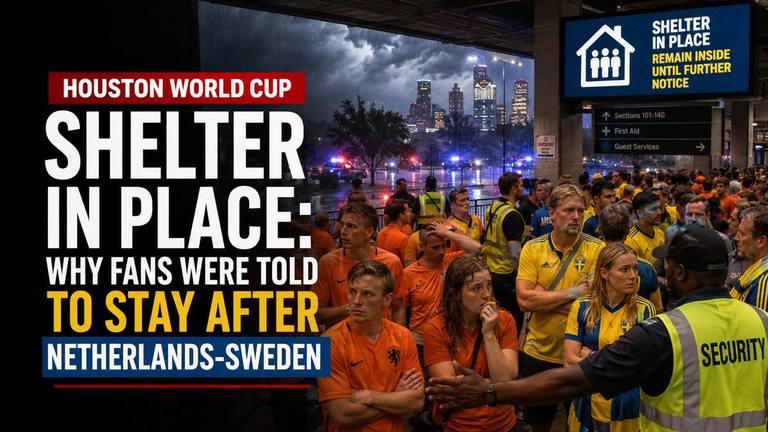
Fans at Houston Stadium were told to shelter in place after the Netherlands-Sweden World Cup match because of lightning in the area. The match had already ended, while weather also disrupted FIFA Fan Festival Houston.