 orywire
News that matters globallyReporting on public life and major developments across the U.S., the UK, and beyond.
orywireCDC says no Andes virus cases tied to the M/V Hondius cruise-ship outbreak have been confirmed in the United States. The agency says the overall risk to the American public and travelers remains extremely low while exposed passengers complete monitoring.
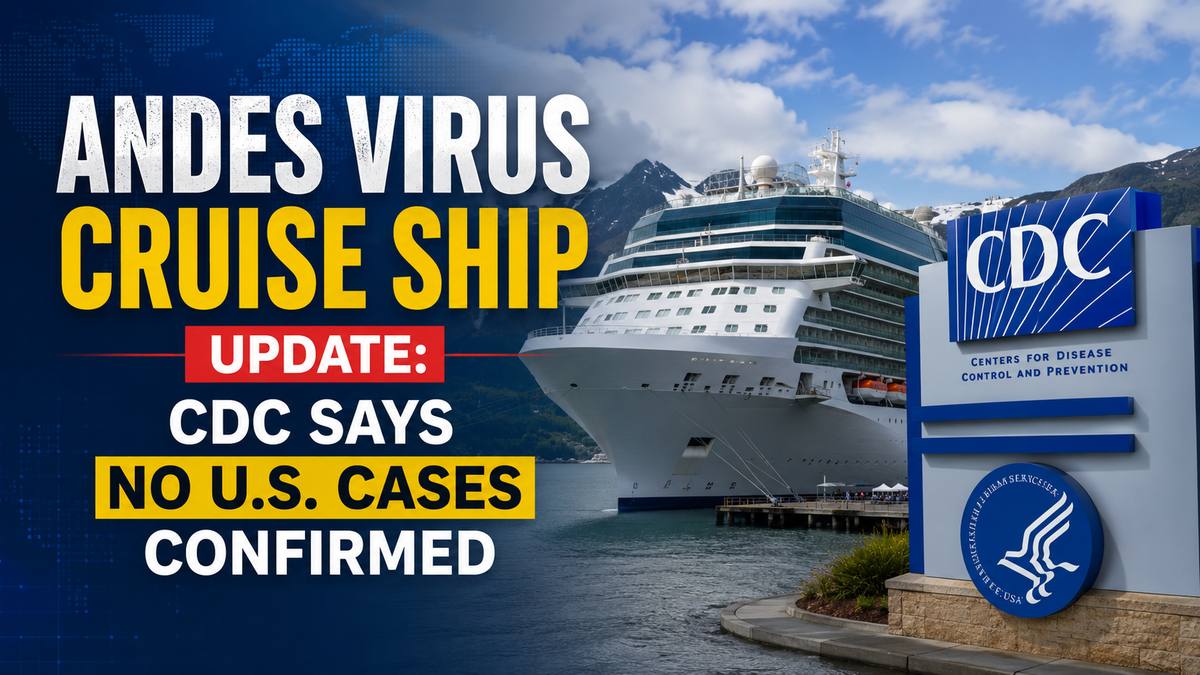
CDC says no cases of Andes virus have been confirmed in the United States as a result of the cruise-ship outbreak tied to the M/V Hondius. The agency says the overall risk to the American public and travelers remains extremely low, and routine cruise travel can continue as normal.
CDC is responding to an outbreak of Andes virus, a type of hantavirus, among passengers and crew of a cruise ship that had been sailing in the Atlantic Ocean. The outbreak was reported to the World Health Organization on May 2.
The U.S. response has focused on people with possible exposure, not on broad restrictions for the public. CDC says it worked with state, federal and international partners to repatriate 18 people who were potentially exposed on the M/V Hondius and send them to the National Quarantine Unit at the University of Nebraska Medical Center for a 42-day public-health monitoring period.
In its June 18 update, CDC said six people remained at the Nebraska unit and 12 had returned home to complete monitoring. CDC said all remained symptom-free and had met criteria set by public-health officials to continue monitoring at home.
The agency also said several U.S. passengers who had left the ship and returned to the United States before the outbreak was identified completed a 42-day monitoring period on June 6. No hantavirus disease was detected in that group, and CDC said no further public-health follow-up was needed for those passengers.
CDC’s public update had not yet posted a separate end-of-monitoring update for the remaining repatriated group when this article was checked early Sunday.
The latest official international count checked for this article came from the European Centre for Disease Prevention and Control, which said on June 17 that 13 cases had been reported in total, including 12 confirmed cases and one probable case. ECDC reported three deaths.
WHO’s May 28 disease-outbreak update said all cases reported to that point had been passengers or crew members on the ship. WHO also said a previously inconclusive case from the United States was later determined to be negative after additional laboratory testing and removed from the total count.
CDC’s current public page focuses on the U.S. status: no confirmed U.S. cases linked to the outbreak, ongoing public-health monitoring for exposed people, and an extremely low risk assessment for the broader public.
Andes virus is not new. CDC says it is a type of hantavirus normally found in areas of South America and can cause hantavirus pulmonary syndrome, a severe disease that affects the lungs.
Andes virus is unusual because it is the only hantavirus known to spread from person to person. CDC emphasizes, however, that it does not spread easily. Person-to-person spread is usually limited to people who have close contact with someone who has symptoms.
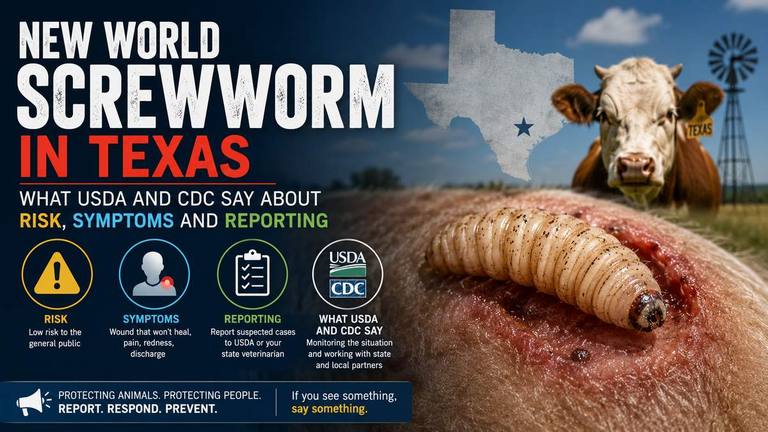
USDA confirmed New World screwworm in a Texas calf on June 3, and state and federal agencies are urging fast reporting of suspicious animal wounds. CDC says no locally acquired human infestations have been reported in the United States, but people and animal owners should know the symptoms and reporting steps.
Close contact can include prolonged direct physical contact, extended time in close or enclosed spaces, or exposure to an infected person’s saliva, respiratory secretions or other body fluids. CDC says hantaviruses are typically spread by rodents.
For travelers who were not on the M/V Hondius and were not in close contact with a person associated with the outbreak, CDC’s Travelers’ Health guidance says routine travel can continue as normal.
CDC says signs and symptoms of Andes virus can appear 4 to 42 days after exposure. Early symptoms of hantavirus pulmonary syndrome can include fatigue, fever and muscle aches, especially in large muscle groups such as the thighs, hips, back and shoulders.
Other symptoms can include headaches, dizziness, chills, nausea, vomiting, diarrhea and abdominal pain. The illness can become severe because hantavirus pulmonary syndrome affects the lungs.
CDC recommends testing only for people who have symptoms and a known exposure history. Anyone who thinks they had contact with a person with Andes virus and is experiencing symptoms should contact a medical professional or a state or local health department immediately.
The 42-day monitoring period is tied to the possible incubation period. CDC’s guidance says compatible illness can appear during the 42 days after exposure, and its public FAQ says the monitoring countdown for cruise passengers began when they departed the ship.
CDC guidance for health departments separates people by exposure risk. People with higher-risk exposure may be asked to limit activities, stay home and avoid close contact with others during monitoring. People in standard monitoring may not have the same activity restrictions, but health departments are advised to keep contact and coordinate if travel is planned.
The purpose is to reduce the chance of secondary spread if symptoms develop. CDC says there is no documented evidence of presymptomatic transmission, but people infected with Andes virus are thought to be most infectious around the time symptoms begin.
Public-health agencies have not identified a single final source for the outbreak in the public updates checked for this article. WHO said investigations were continuing with authorities in Argentina and Chile to understand the circumstances of exposure and the source of the outbreak.
For most U.S. readers, the immediate answer remains narrow: CDC says there are no confirmed U.S. cases from this outbreak, the exposed groups have been under public-health monitoring, and the overall risk to the public and travelers is extremely low.
This story should be updated when CDC posts a new current-situation update, when U.S. monitoring formally ends for the remaining repatriated travelers, or if WHO or ECDC changes the international case count or risk assessment.
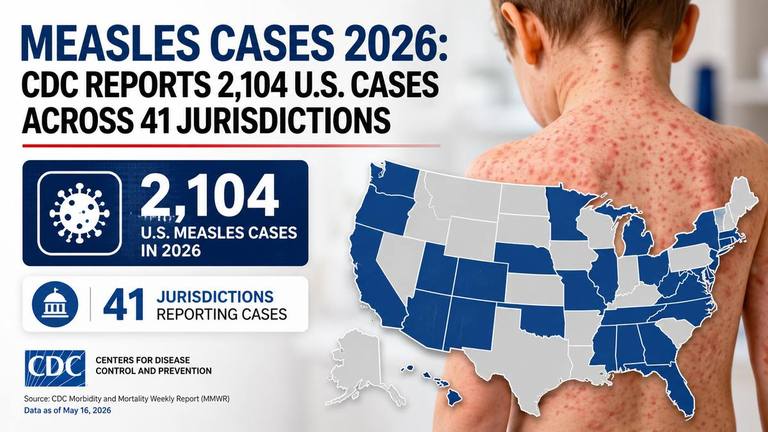
CDC reported 2,104 confirmed measles cases in the United States in 2026 as of its June 18 update, with resident cases reported by 41 jurisdictions. Most confirmed cases are linked to outbreaks, and state health departments may post local exposure updates before CDC’s national page changes.
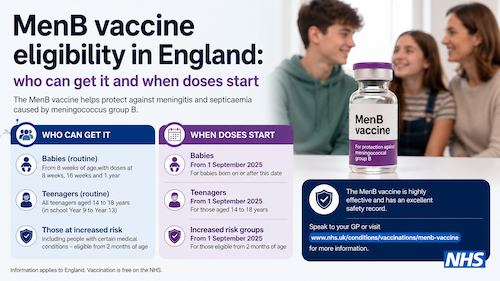
The one-off MenB vaccine programme covers Year 13 pupils and under-25s starting university or some residential further education for the first time. NHS public information says the offer starts from 20 July 2026, with two doses needed for protection.