 orywire
News that matters globallyReporting on public life and major developments across the U.S., the UK, and beyond.
orywireThe May 2026 U.S. jobs report is scheduled for release at 8:30 a.m. ET today. As of the last check, official BLS pages had not yet posted May payroll, unemployment, wage or revision figures.
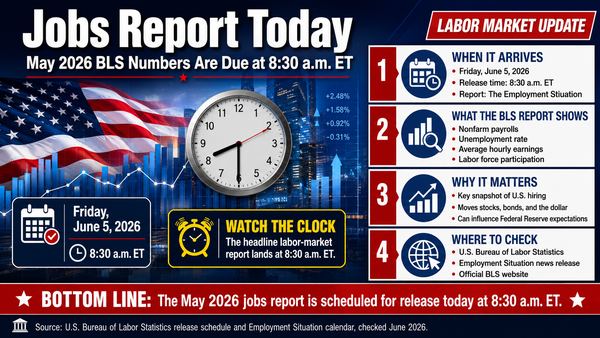
The May 2026 jobs report is scheduled for release at 8:30 a.m. ET today, according to the U.S. Bureau of Labor Statistics. As of the last check before that release, the official BLS pages had not yet posted May payroll, unemployment, wage or revision figures; the newest official jobs numbers were still for April.
The BLS calendar lists the Employment Situation report for May 2026 at 8:30 a.m. ET on Friday, June 5. That report is the government’s monthly snapshot of U.S. hiring, unemployment, wages and job-market revisions.
The BLS usually publishes the report through its Employment Situation release page and updates its latest-numbers section after publication. Readers looking for the official figure should rely on the BLS release rather than private forecasts or early market commentary.
The first number most readers look for is total nonfarm payroll employment, which shows how many jobs employers added or lost during the month. The same report also includes the unemployment rate, average hourly earnings, average weekly hours and revisions to earlier payroll estimates.
Those revisions matter because the first payroll estimate is preliminary. The May report is expected to include updated figures for the prior two months, which can change the labor-market picture even if the May headline number is clear.
The most recent official BLS Employment Situation release showed that total nonfarm payroll employment rose by 115,000 in April and that the unemployment rate was unchanged at 4.3 percent.
Together, the February and March revisions left employment 16,000 lower than previously reported.
The jobs report is one of the main official gauges of whether the labor market is expanding, slowing or holding steady. Payroll growth shows employer demand for workers, while the unemployment rate captures conditions for people looking for work.
Wages are also important because they help show whether workers’ pay is rising fast enough to keep pressure on inflation or support household spending. The revisions can be just as important as the headline number because they show whether earlier readings were too strong or too weak.
After the BLS posts the May report, the key updates will be the May payroll total, the unemployment rate, average hourly earnings, and revisions to March and April job growth. Industry details will also show whether hiring was concentrated in a few sectors or spread more broadly across the economy.
For readers checking back after the release, the official May figures should replace the April baseline above. Any update should also note whether the May report changes the recent trend in hiring, unemployment or wage growth.