 orywire
News that matters globallyReporting on public life and major developments across the U.S., the UK, and beyond.
orywireFDA and CDC are investigating a multistate Listeria outbreak linked to soft cheese, with recalls involving Clover Hill Dairy products and Nelson & Isa Lacteos requesón. Consumers should not eat recalled cheese and should clean any surfaces or containers that may have touched it.
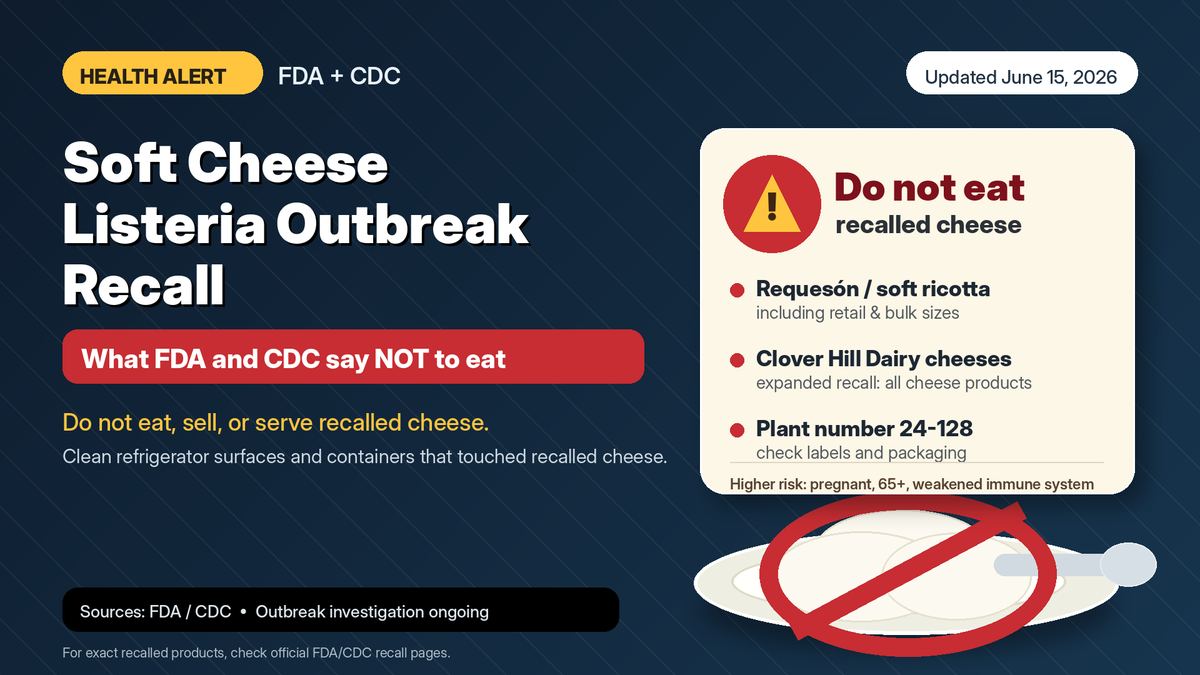
Consumers should not eat recalled soft cheese linked to a Listeria outbreak, federal health officials say. The latest FDA and CDC updates say the recall now includes all Clover Hill Dairy cheese products, along with certain Nelson & Isa Lacteos requesón sold in New York.
The CDC said the investigation remains open and that recalled cheese should not be eaten, sold or served. As of the latest CDC update, nine people had been reported sick in three states, including eight hospitalizations and one death.
Clover Hill Dairy, based in Mechanicsville, Maryland, initially recalled soft ricotta and requesón products. Maryland health officials later announced an expanded advisory for all cheese products made by Clover Hill Dairy because of possible Listeria monocytogenes contamination, and the FDA said the company agreed to expand its recall to all cheese products made at the facility.
The recalled Clover Hill products include:
A separate FDA-posted recall from Nelson & Isa Lacteos LLC covers 1-pound packages of requesón cheese sold in plastic clamshell containers at retail locations in New York from May 15 to May 28, 2026. FDA said that cheese was likely repacked at retail stores, so labels and coding may vary depending on where it was purchased.
FDA said Clover Hill soft ricotta and requesón cheese was distributed from May 4 through May 30 in North Carolina, New York, Virginia, Maryland, New Jersey and Washington, D.C., through bulk distributors, retail stores and direct consumer sales. CDC said the cheeses could have been further distributed to additional states.
Consumers should check for Clover Hill Dairy’s plant or manufacturer permit number, 24-128, when it appears on the label. Maryland health officials also said Clover Hill products may have been relabeled under other brand names when distributed, including Kesso, Quesos La Ricura, Izalco, De Mi Pueblo and Rio Lindo.
The initial Clover Hill soft ricotta and requesón recall included 10-ounce, 12-ounce and 14-ounce clamshell containers, as well as 5-gallon and 2-gallon bulk buckets. The expanded advisory is broader and applies to all cheese products made by Clover Hill Dairy.
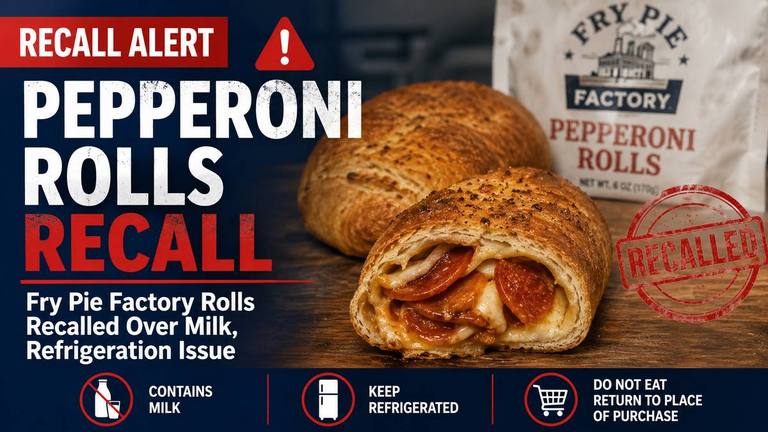
Fry Pie Factory recalled 5-ounce Pepperoni Rolls sold in Ohio and parts of West Virginia because milk was not declared on the label and the rolls were not kept at proper refrigeration temperatures. Consumers should not eat the recalled product and should discard it or return it for a refund.
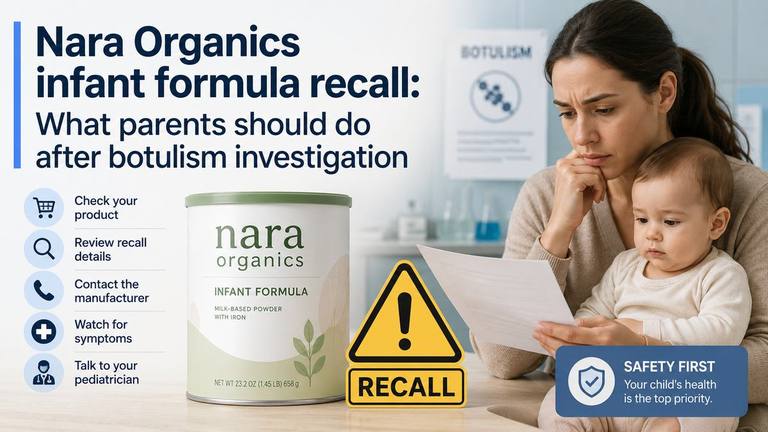
The official notices identify the products mainly by manufacturer, plant number, product names, package style, distribution route and distributor brand names. A single UPC list for all expanded Clover Hill products was not posted in the official updates.
FDA and CDC say the outbreak is linked to requesón, a soft cheese similar to ricotta, made by Clover Hill Dairy. The FDA said six product samples of requesón cheese tested positive for Listeria monocytogenes and matched the outbreak strain. One environmental sample collected by Maryland state partners also tested positive and matched the outbreak strain.
The CDC said epidemiologic, laboratory and traceback data show that some requesón cheeses supplied by Clover Hill Dairy were contaminated and were making people sick. Investigators are still working to determine the source of contamination and whether additional cheeses are linked to the outbreak.
Do not eat recalled cheese. Throw it away or return it to the place of purchase.
Check refrigerators and freezers for recalled cheese. FDA says if cheese was frozen without its original packaging and you cannot tell whether it is part of the recall, throw it away.
Clean and sanitize refrigerators, containers, cutting boards, counters and other surfaces that may have touched recalled cheese. CDC and FDA both warn that Listeria can survive in refrigerated temperatures and spread to other foods and surfaces.
Restaurants, retailers and other businesses should not sell or serve recalled cheese. CDC says businesses should also wash and sanitize items and surfaces that may have come in contact with the recalled products.
Listeria can cause serious illness in people who are pregnant, adults 65 or older and people with weakened immune systems. CDC says symptoms usually begin within two weeks after eating contaminated food, but they can start the same day or as late as 10 weeks later.
Pregnant people may have fever, muscle aches and tiredness. CDC says Listeria infection during pregnancy can lead to pregnancy loss, premature birth or serious illness in newborns.
Other people can develop headache, stiff neck, confusion, loss of balance and convulsions, along with fever, muscle aches and tiredness. Health officials say anyone with symptoms after eating recalled cheese should contact a health care provider.
FDA also advised people at higher risk for severe Listeria illness not to eat queso fresco-type cheese, including soft ricotta and requesón, while the investigation continues.
The outbreak investigation remains ongoing. FDA said additional products may be impacted and that further testing by federal and state partners is underway.
Consumers should recheck FDA, CDC and state health department updates if they bought Clover Hill Dairy cheese, requesón, soft ricotta or cheese sold under a distributor brand name tied to Clover Hill. This article should be updated when health officials add products, change the illness count, identify more distribution locations or close the investigation.
Nara Organics has recalled all Nara Organics Whole Milk Organic Infant Formula in the U.S. amid an FDA and CDC infant botulism investigation. Caregivers should stop using the formula immediately and follow official guidance for opened and unopened cans.
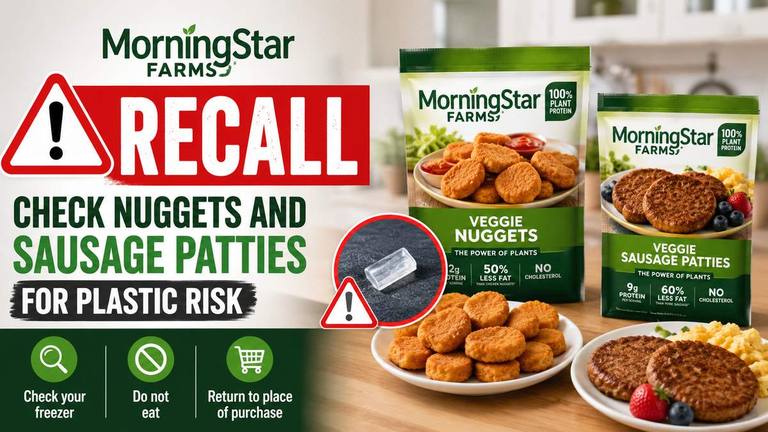
MorningStar Farms recalled select Buffalo Chik’n Nuggets and Hot & Spicy Sausage Patties because of possible plastic pieces in the food. Consumers should check UPCs and better-if-used-before dates before using products from the freezer.