 orywire
News that matters globallyReporting on public life and major developments across the U.S., the UK, and beyond.
orywireThe Met Police says its agreement with Apple is aimed at making stolen phones harder to reactivate and resell. Users still need to lock devices, keep anti-theft features switched on and report thefts quickly.
 By Emily CarterPublished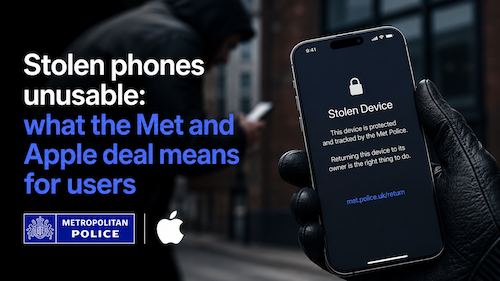
The Met Police says a new agreement with Apple is designed to make stolen phones harder to reactivate and sell on. For phone users, the immediate takeaway is not that theft has been solved, but that iPhone owners should keep anti-theft features switched on and act quickly if a handset is stolen.
The agreement allows stolen device identifiers to be shared so the Met and Apple can build a clearer picture of what happens to phones after they are taken. The Met said this should help track whether stolen phones reappear in circulation and reduce the value of stolen devices to criminals.
The force said early data from the collaboration showed that a significant number of stolen phones in a recent sample had not been successfully reactivated. It did not publish the sample size in the accessible announcement.
Met Commissioner Sir Mark Rowley said the aim is to cut off the reward for offenders by making stolen phones harder to reuse. Apple also said, in a statement included in the Met announcement, that keeping users and their data safe is central to its work.
Not immediately in every case. The Met’s announcement says the agreement is making stolen phones unusable by disrupting reactivation and resale, but it should not be read as a guarantee that every stolen handset will stop working the moment it is taken.
The practical effect for users is that reporting and locking a stolen phone still matters. The police-industry system may reduce the resale value of stolen devices, but users still need to protect the handset, the account and any linked banking or payment apps.
The Met is also pushing for further action. It has asked the Home Office to prepare legislation that would introduce minimum technical standards so any phone stolen in the UK is effectively unusable. That proposal is not the same as a law already being in force.
Apple says Stolen Device Protection is available on iPhones running iOS 17.3 or later and must be switched on before a device is lost or stolen. The feature adds extra checks for sensitive actions, including changing an Apple Account password, changing a device passcode, turning off Lost Mode or erasing all content and settings.
Users can check it in Settings, then Face ID & Passcode, then Stolen Device Protection. Apple says choosing “Always” under the security delay setting makes additional checks apply even in familiar locations.
Find My should also be enabled before anything happens. If Find My was not turned on before the phone was stolen, Apple says the device will not appear in Find My or at iCloud.com/find, and it cannot be marked as lost through that route.
The Met also advises phone users to keep a note of the IMEI number, which stands for International Mobile Equipment Identity. It can be found by dialling \*#06# from the phone keypad and should be stored somewhere other than on the phone.
Do not try to recover a stolen phone yourself if it appears on a map at a place you do not recognise. Apple says users should contact local law enforcement instead.
For an iPhone, mark the device as lost as quickly as possible through Find My or iCloud. Apple says this is the best way to protect the device and Apple Account after a theft.
Report the theft to police and include details such as the IMEI number where possible. The Met says people should call 999 if they have been hurt, feel unsafe or the crime has only just happened. For non-emergencies, the force says reports can be made online or by calling 101.
Users should also contact their mobile network provider, ask it to suspend the account and provide the IMEI number so the device can be blocked. Banks and other financial providers should be contacted if cards, banking apps or payment services were linked to the stolen phone.
Apple says users should not remove a stolen iPhone from Find My, even if they remotely erase it. Removing it from Find My removes Activation Lock, which can make the device easier for a thief to unlock and resell.
The agreement comes alongside Operation Reckoning, the Met’s wider crackdown on phone theft in London. The force said mobile phone theft from the person and robbery offences fell by 14,000 between June 2025 and May 2026, an 18% reduction compared with the previous 12 months.
The Met said the fall was sharper in Westminster, where phone theft from the person and robbery offences were down 45.8% from January to May 2026 compared with the same period in 2025. That represented 4,500 fewer phones stolen in Westminster, according to the force.
The problem is not limited to street snatching. The Met said earlier investigations had targeted handlers and international export networks, including a case involving up to 40,000 stolen devices trafficked from the UK to China between 2024 and 2025.
More detail may come from Apple, the Met or the Home Office if technical standards or legislation are developed. The Met said Samsung and Google are also making security changes, but the latest public agreement highlighted by the force is with Apple.
For now, the safest approach is to treat the new agreement as extra protection rather than a replacement for user action. Keep the phone updated, switch on anti-theft features before anything happens, record the IMEI number and know how to lock the device quickly if it is stolen.
This article will be updated if the Met, Apple or the Home Office publishes further details on how stolen-device blocking will work in practice.
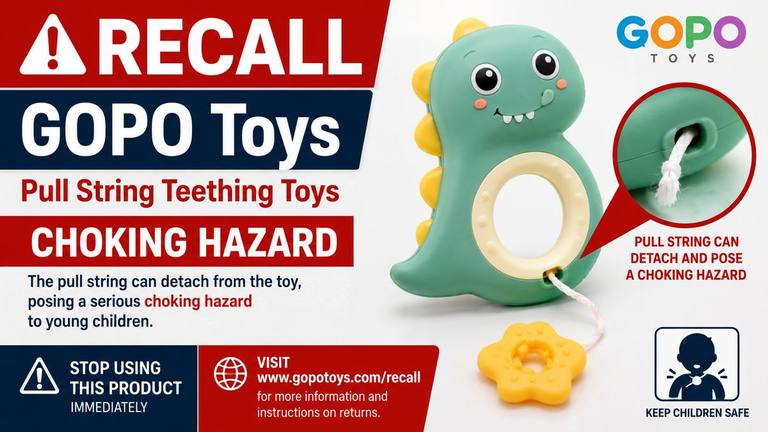
GOPO TOYS pull string teething toys sold on Amazon are recalled because the silicone strings can lodge in a child’s throat. CPSC says consumers should stop using the toy, check the batch number and contact GOPO Toys for a refund.
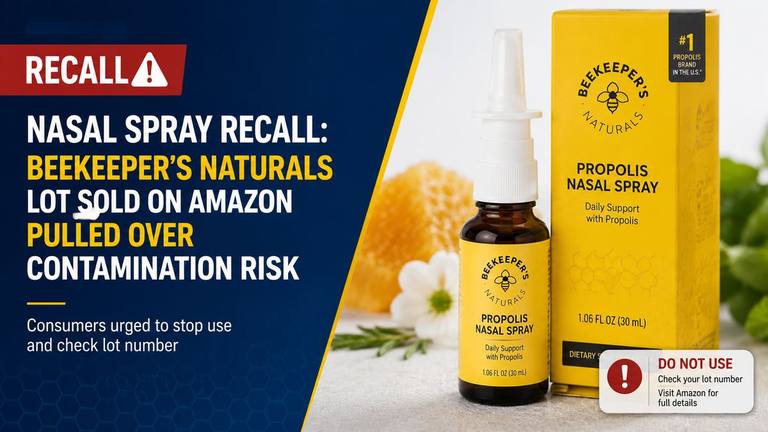
Beekeeper’s Naturals is recalling lot 5950 of its Saline Nasal Spray sold through Amazon after testing found microbial contamination concerns. Consumers should check the lot number, stop using affected bottles and contact the company for a refund.
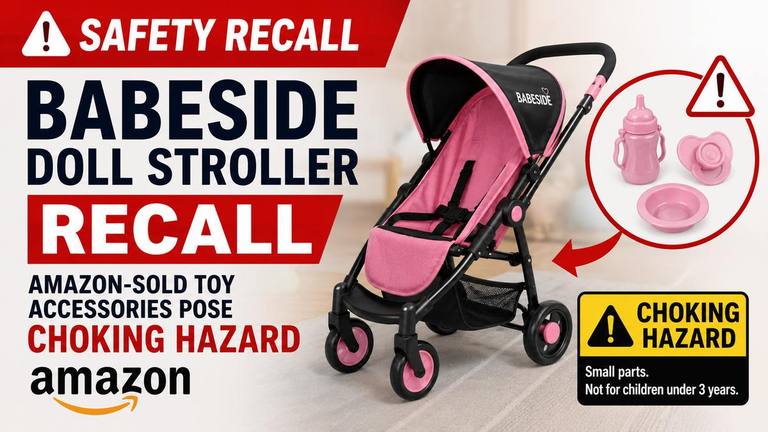
About 2,200 BABESIDE Doll and Stroller Toys sold on Amazon are recalled because the toy pacifier and plush bear can pose choking hazards, the CPSC says. Consumers should take those accessories away from children and contact HYBDOLLS for free replacements.