 orywire
News that matters globallyReporting on public life and major developments across the U.S., the UK, and beyond.
orywireThe House rejected a short-term extension of FISA Section 702, leaving a major surveillance authority at its June 12 deadline. Here is what Section 702 does, what expires and what Congress can do next.
 By Rachel WhitmanPublished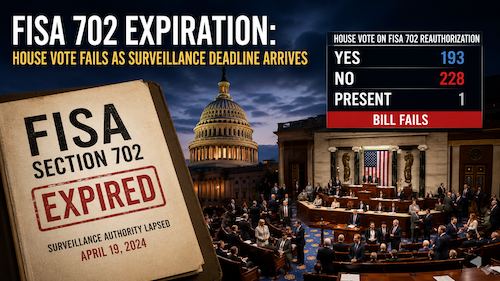
The House rejected a short-term FISA Section 702 extension on June 11, leaving a contested U.S. surveillance authority at its June 12 deadline. The failed bill would have moved the deadline to July 2, but no extension had been enacted at the latest check.
The immediate next step is political: Congress can try again with a short extension, negotiate a broader reauthorization with privacy changes, or allow the statutory authority to lapse while agencies rely on existing court approvals for at least some activity.
The bill, H.R. 9238, would have amended the FISA Amendments Act of 2008 to extend Title VII authorities from June 12, 2026, to July 2, 2026, according to the bill text published by GovInfo.
The House considered the measure under a fast-track process that required a two-thirds majority. It failed 198 to 218, according to the House Clerk. The vote split across party lines but not cleanly: 190 Republicans, seven Democrats and one independent voted yes, while 19 Republicans and 199 Democrats voted no.
Because the measure failed, it did not go to the president. Reuters reported that later Senate attempts to move rival short-term extensions by unanimous consent were also blocked, leaving no backup measure cleared by Congress.
Section 702 is part of the Foreign Intelligence Surveillance Act. It allows U.S. intelligence agencies to target non-U.S. persons who are reasonably believed to be outside the United States to collect foreign intelligence information.
The intelligence community’s public explainer says Section 702 may not be used to target U.S. persons or anyone inside the United States. It also bars “reverse targeting,” meaning the government cannot target a foreign person overseas as a way to collect information about a person in the United States.
That does not end the privacy debate. Americans’ communications can be swept into Section 702 collection when they communicate with a foreign target. Agencies then use minimization and querying rules to handle that information. Critics want stronger limits, especially warrant requirements before officials search Section 702 data using U.S. person identifiers.
The current statutory deadline is June 12, 2026. Public Law 119-87, signed April 30, moved the deadline from April 30 to June 12. H.R. 9238 would have moved it again, to July 2, but the House vote failed.
The deadline applies to the statutory authority for Title VII of FISA, including Section 702. It does not necessarily mean every active surveillance activity stops the moment the deadline passes.
The distinction matters because Section 702 operates through annual certifications approved by the Foreign Intelligence Surveillance Court. The Brennan Center for Justice says the most recent approvals in March 2026 could keep existing Section 702 surveillance authority in place until March 2027 under a grandfathering rule. Supporters of immediate reauthorization argue that a lapse still creates legal and operational uncertainty, especially for future collection and cooperation from communications providers.
The failed vote reflected two separate fights that came together at the deadline.
Privacy-minded lawmakers in both parties have long argued that Section 702 should not be renewed without stronger protections for Americans’ communications. Their core demand is a warrant requirement for searches involving U.S. person information.
The immediate standoff also involved President Donald Trump’s plan to install Bill Pulte as acting director of national intelligence. Reuters reported that Democrats objected to Pulte’s lack of intelligence experience and said the appointment raised concerns about control of powerful surveillance tools. Some Republicans also opposed a clean extension because it did not include the privacy reforms they wanted.
Trump later announced Jay Clayton as his nominee for permanent director of national intelligence, but that nomination did not itself resolve the Section 702 deadline.
Congress still has several options.
House leaders could bring up another short-term extension, either with the same July 2 deadline or a different date. Lawmakers could also try a longer reauthorization with negotiated changes to querying rules, oversight or transparency requirements.
The Senate could move first if a deal emerges there, but any bill would still need to clear both chambers and be signed by the president. Without that, the statutory deadline remains in place.
For readers, the practical points to watch are whether House and Senate leaders announce another vote, whether the administration changes its acting DNI plan, and whether reform supporters get a vote on warrant or transparency provisions.
Not automatically, according to legal analysts cited by Reuters and the Brennan Center. Existing court certifications may allow some Section 702 activity to continue into 2027, and communications providers may still face legal obligations tied to existing directives.
But that does not make the deadline meaningless. A lapse can still create disputes over new collection, provider cooperation, future certifications and the legal footing of the program. It also keeps the larger policy fight alive: whether Congress should renew Section 702 as is, add privacy protections, or let the authority sunset.
The safest reading is that the House vote did not end Section 702 collection overnight, but it did leave Congress without a current reauthorization deal as the deadline arrived.
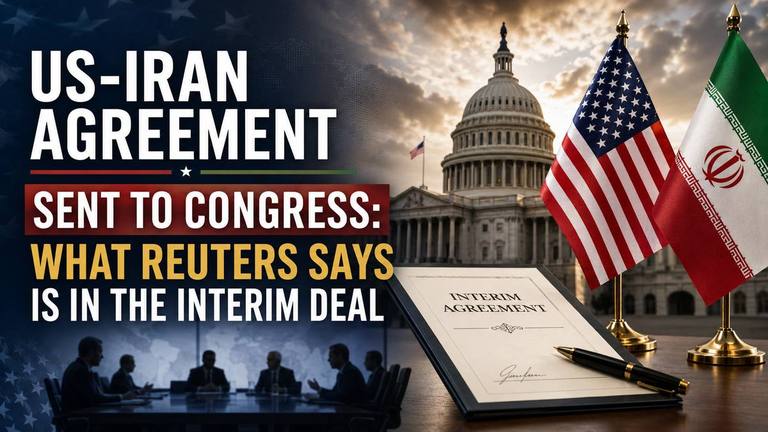
The White House sent Congress the text of an interim U.S.-Iran agreement, Reuters reported. The document sets a 60-day negotiating window while leaving Iran’s nuclear program, sanctions and the deal’s durability unresolved.
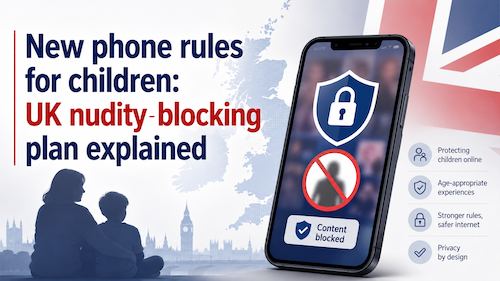
The government wants device-level nudity blocking on children’s smartphones and tablets. The plan is not law yet, but tech firms have been given three months to act before ministers consider legislation.
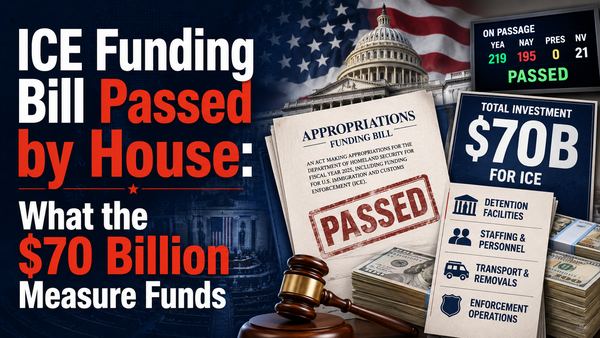
The House passed S. 2, the Secure America Act, a nearly $70 billion immigration-enforcement funding bill for ICE, Border Patrol and DHS through fiscal 2029. The measure now goes to President Donald Trump after a 214-212 House vote.