 orywire
News that matters globallyReporting on public life and major developments across the U.S., the UK, and beyond.
orywireUSDA and Texas officials have confirmed New World screwworm in two Zavala County calves, with animal movement controls in place in the Zavala and Uvalde County areas. Officials say public risk remains low, but residents should check animals for wounds, larvae or eggs and report suspected infestations quickly.
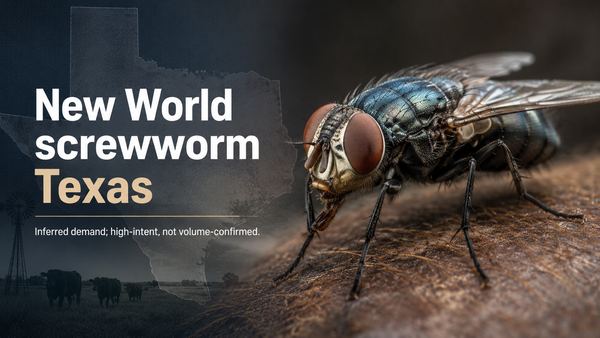
Federal and Texas officials have confirmed New World screwworm in two calves in Zavala County, Texas, and animal movement controls remain in place in the Zavala and Uvalde County areas. Officials say the risk to people remains low, but residents should inspect livestock, pets and other animals for suspicious wounds, larvae or eggs and report suspected animal cases immediately.
USDA’s Animal and Plant Health Inspection Service announced June 3 that New World screwworm had been confirmed in a 3-week-old calf in Zavala County. Larvae were found in the calf’s umbilical area.
USDA announced a second detection June 5 in a 1-month-old calf in Zavala County, about 5.6 miles from the first confirmed detection. The agency said APHIS and Texas partners were continuing to collect and test other samples from the surrounding area, and those samples had come back negative as of that announcement.
The Texas Animal Health Commission’s current situation page lists the June 3 index case and a June 5 situation update involving a 30-day-old calf with an umbilical lesion, both in Zavala County.
New World screwworm is a parasitic fly, not a worm. Its larvae can infest living warm-blooded animals, including livestock, pets and wildlife. Officials say people can be affected in rare cases.
The flies lay eggs in wounds or body openings. When the eggs hatch, the larvae burrow into living tissue, which can make wounds larger and more severe. USDA and Texas officials say untreated infestations can cause serious injury or death in animals.
The pest was eradicated from the United States in 1966, according to USDA. The current concern follows its northward movement through Central America and Mexico in recent years.
TAHC says a quarantine is in place because of an established New World Screwworm Infested Zone in the Zavala and Uvalde County areas.
All warm-blooded animals in that zone may not move out without prior authorization from TAHC, the agency says. Animals moving outside the zone must be inspected, and an animal movement certificate must accompany the movement.
That means livestock owners, pet owners and others with animals in the affected zone should not move animals first and ask questions later. TAHC says animal owners should contact the agency to set up an inspection if an animal needs to move outside the infested zone.
USDA and Texas officials are urging residents to look closely at livestock, pets and other animals, especially newborn animals or animals with wounds.
Watch for draining or enlarging wounds, signs of discomfort, irritated behavior, head shaking, a smell of decay, and visible maggots, larvae or eggs. Officials also advise checking body openings such as the nose, ears, genitalia and the navel area of newborn animals.
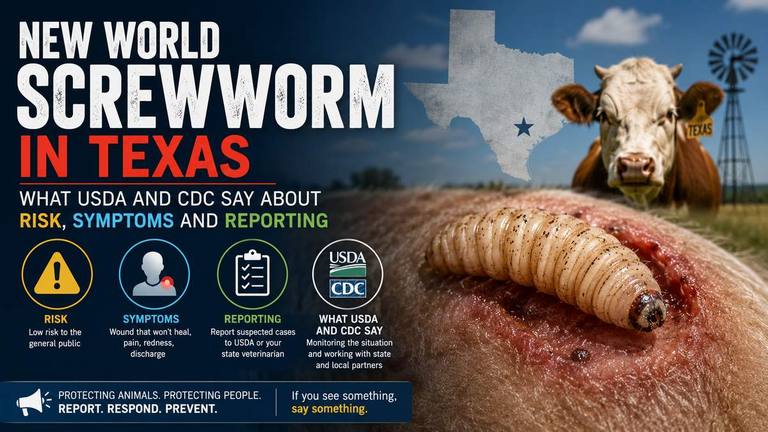
USDA confirmed New World screwworm in a Texas calf on June 3, and state and federal agencies are urging fast reporting of suspicious animal wounds. CDC says no locally acquired human infestations have been reported in the United States, but people and animal owners should know the symptoms and reporting steps.

CDC says no Andes virus cases tied to the M/V Hondius cruise-ship outbreak have been confirmed in the United States. The agency says the overall risk to the American public and travelers remains extremely low while exposed passengers complete monitoring.
TAHC says livestock and pet owners can reduce risk by keeping open wounds clean and covered, working with a veterinarian on prevention and treatment, and inspecting pets and vehicles when traveling in or near infested areas.
If an animal may be infested, do not move it. For suspected cases in livestock or pets, TAHC lists its veterinarian call line at 1-800-550-8242. For wildlife sightings, the Texas governor’s office directed residents to Texas Parks and Wildlife Department resources or local TPWD wildlife biologists.
CDC’s June 4 situation summary said no locally acquired human infestations had been reported in the United States. The agency said the U.S. risk for people remains low and is localized to areas where New World screwworm flies are circulating.
Texas DSHS also says the public risk remains low, but people can sometimes get an infestation if they are in an area where the fly is present. Higher-risk situations include having an open wound, working outdoors, sleeping outdoors or spending extended time around livestock in affected areas.
DSHS says New World screwworm is not directly caught from an infested animal or person. The concern is that adult flies can lay eggs on wounds or mucous membranes.
People who see or feel larvae in or on a wound should contact a health care provider immediately. CDC and DSHS advise people not to try to remove larvae themselves and not to throw live larvae in the trash or outside.
The confirmed detections are being handled as an animal-health and movement-control response, not a consumer product recall.
TAHC says the USDA Food Safety and Inspection Service is responsible for ensuring the commercial supply of meat, poultry and egg products is safe and properly labeled. The state agency says evidence of screwworm infection would be identified during FSIS inspection processes, and adulterated product from an affected animal would not be allowed into commerce.
USDA’s confirmed-detections page says its dashboard is designed to track confirmed New World screwworm animal and wild fly detections by county, state, species, confirmation date and status. TAHC says additional Texas detections or updated information will be posted as situation updates on its New World screwworm page and social media.
This article will be updated if USDA or Texas officials report additional detections, change the movement-control zone or issue new guidance for residents, animal owners or health care providers.
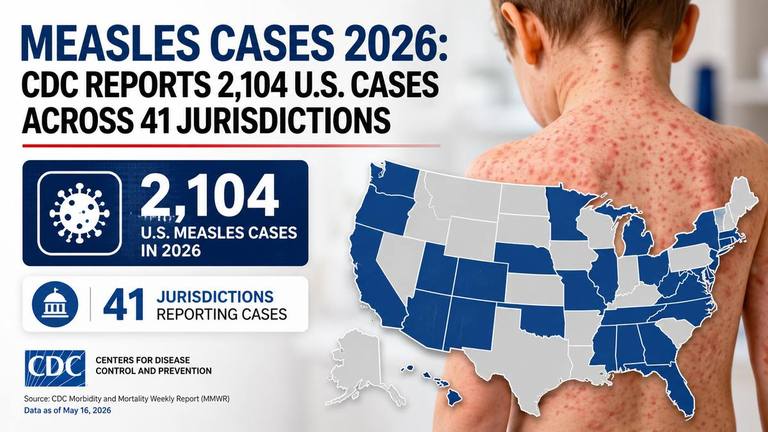
CDC reported 2,104 confirmed measles cases in the United States in 2026 as of its June 18 update, with resident cases reported by 41 jurisdictions. Most confirmed cases are linked to outbreaks, and state health departments may post local exposure updates before CDC’s national page changes.