 orywire
News that matters in AmericaReporting on public life, technology, money, and policy in the United States.
orywireFIFA’s current World Cup 2026 Stadium Code of Conduct says reusable water bottles may not be brought into stadiums. Fans should check the latest code, ticket instructions and venue rules before heading to the gate.
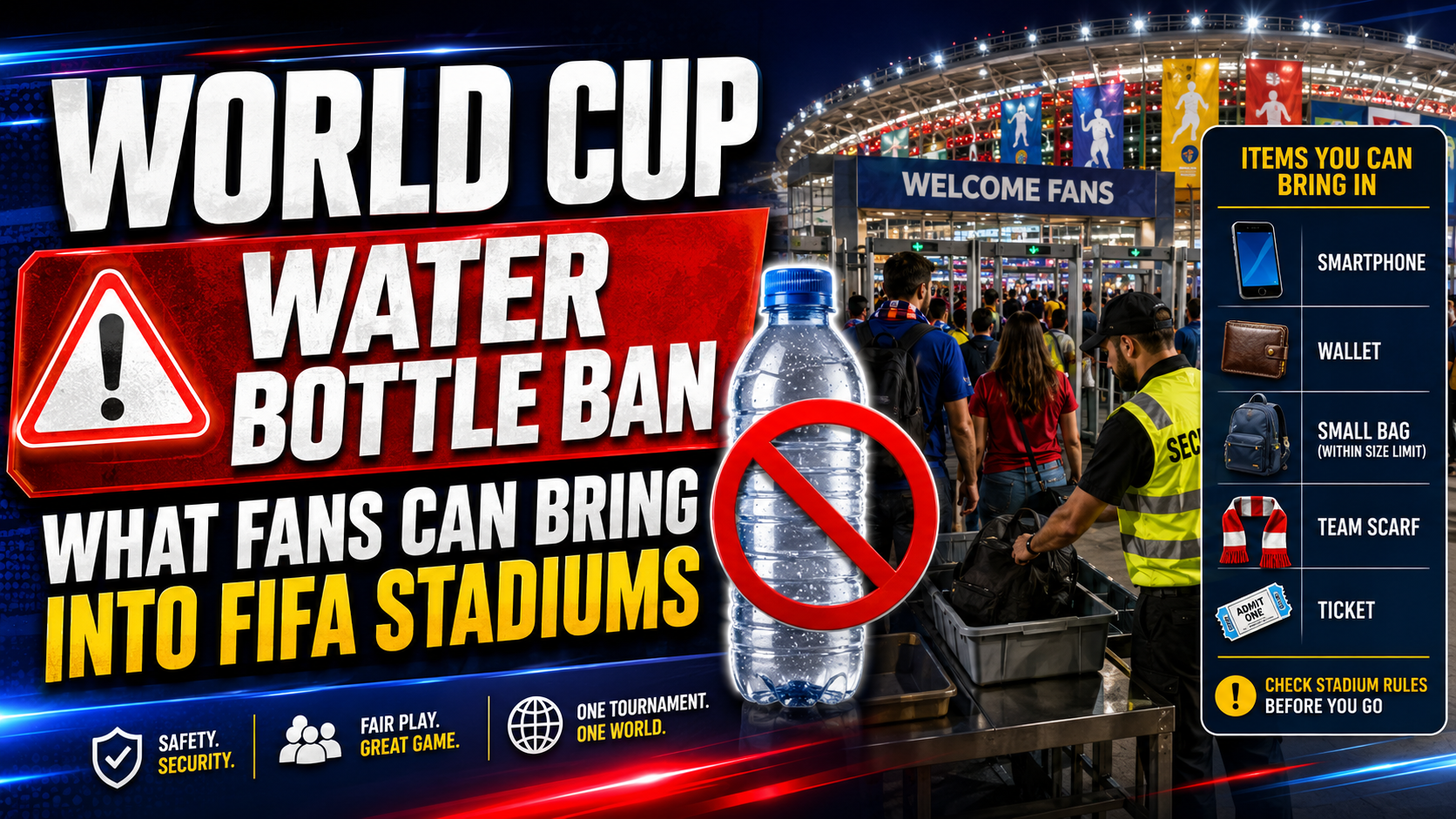
Fans should not bring reusable water bottles to FIFA World Cup 2026 stadiums under the current stadium rules. Ticket holders should plan to enter without a refillable bottle and check the latest FIFA and venue guidance before match day, especially if they need medical or child-care exceptions.
FIFA’s Stadium Code of Conduct, effective June 2, says reusable water bottles may not be brought into the stadium. The same prohibited-items section also bars bottles, cups, jars, cans, thermoses, flasks and other closed or capped receptacles that may be thrown or cause injury.
The code applies to World Cup 2026 stadium areas used for the competition where a valid match ticket or accreditation is required. It also says FIFA may revise the stadium code, so fans should rely on the latest version rather than older screenshots or past venue rules.
The current answer is no for reusable water bottles. Reuters reported that FIFA had earlier allowed empty, transparent, reusable plastic bottles before the updated code prohibited them.
That means fans should not assume an empty clear bottle will be allowed at the gate. FIFA’s ticket FAQ directs fans to the Stadium Code of Conduct for the full prohibited-items list and says FIFA, stadium authorities and government authorities reserve the final decision on whether an item is prohibited.
FIFA’s code also limits liquids and food brought from outside. Hand sanitizer up to 100 ml is listed as an exception. Other liquids over 100 ml are generally prohibited unless they are purchased inside the stadium.
The code lists exceptions for baby milk and sterilized water in containers up to 1 liter per child. It also allows medically required liquids up to 500 ml, but only with a medical certificate in English, French or Spanish and in the presence of the person for whom they are intended.
Food brought from outside is also restricted, with exceptions for items bought inside the stadium, medically required food and food for babies or young infants. Fans with medical needs should bring the required documentation and allow extra time for screening.
FIFA’s current bag rule allows certain clear bags made of plastic, vinyl or PVC. The approved clear bags may not exceed 12 inches by 6 inches by 12 inches. Small clutch purses or wallets about the size of a hand are allowed even if they are not clear, as long as they are no larger than 4.5 inches by 6.5 inches.
Security screening is part of stadium entry. The code says event organizers have the final say on prohibited items, and fans who do not comply may be refused entry or removed from the stadium.
FIFA told Reuters the bottle decision was made to prevent risk and injury to players and attendees. Reuters also reported that FIFA said it works with host city committees and local authorities on heat-mitigation resources that can include misting stations, fans, hydration stations and cooling tents around stadium areas.


The public stadium code and ticket FAQ do not give one tournament-wide water price or a single venue-by-venue list of free water access points. Fans should check the host stadium’s matchday page, their ticket email, stadium maps and any accessibility or medical-needs instructions before leaving for the match.