 orywire
News that matters globallyReporting on public life and major developments across the U.S., the UK, and beyond.
orywireThe FAA’s Sunday operations plan lists possible ground-stop or delay programs at SFO, Boston Logan and Houston’s IAH/HOU, while current FAA airport pages showed only minor general delays at the latest check. Travelers should verify their flight status with their airline before going to the airport.

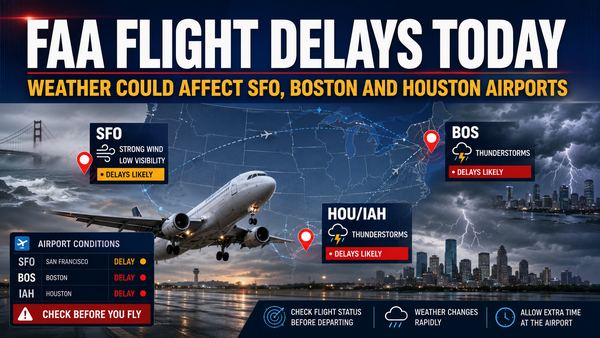
The FAA was not showing major general delays at several watched airports early Sunday, but its national operations plan flagged possible weather-related delay programs later in the day at San Francisco, Boston and Houston airports. Travelers should check their airline app before leaving for the airport because FAA airport status pages are not flight-specific.
The FAA’s Air Traffic Control System Command Center listed possible ground-stop or ground-delay programs for San Francisco International Airport, Boston Logan International Airport and Houston’s George Bush Intercontinental and William P. Hobby airports.
The same operations plan listed no active terminal programs and no active or planned airspace flow programs at the time it was issued. It also listed no staffing triggers.
That does not mean every flight at those airports will be delayed. FAA planning language can change quickly as weather, runway use and air traffic volume shift through the day.
At the latest check, the FAA’s airport status pages showed no destination-specific delays for SFO, Boston Logan, Houston Bush or Houston Hobby.
General departure and arrival delays at those airports were listed as 15 minutes or less. The FAA says those pages describe general airport conditions and are not a substitute for airline-specific flight status.
Travelers flying through those airports should still watch for changes, especially if storms, low ceilings or wind move into the area before departure.
The FAA operations plan listed thunderstorm constraints for Boston, the New York terminal area, Philadelphia and the Dallas-Fort Worth terminal area. It also listed low ceilings at Seattle and wind constraints at Denver, San Francisco and Las Vegas.
The National Weather Service’s Storm Prediction Center said severe thunderstorms were expected Sunday across parts of the northern Plains, with additional storm risks from eastern Oklahoma and southeastern Kansas toward the Ozarks, the mid-Mississippi Valley and the Mid-Atlantic.
The Weather Prediction Center also forecast numerous thunderstorms across a broad area from the Great Plains into the Mississippi, Ohio and Tennessee valleys, with a slight risk of excessive rainfall for much of the mid-Mississippi Valley, the Ozarks and western Tennessee Valley.
Check your airline app or airline website first. That is the best source for whether your specific flight is delayed, canceled, rebooked or still on time.
Then check the FAA airport status page for broader airport conditions. If your trip connects through one of the listed weather regions, check the status of both your departure airport and your connecting airport.
Passengers with tight connections should watch for rolling delays. Weather delays can start at one airport and then affect later flights elsewhere as crews and aircraft arrive late.
FAA delay programs can be added, extended or canceled during the day. This article should be refreshed after the next FAA operations plan update or sooner if the FAA lists an active ground stop, ground-delay program or major airport delay.
For individual travel decisions, the most important source remains the airline because it controls rebooking, gate changes and customer notifications.

The FAA is investigating after Delta Air Lines Flight 2351 executed a go-around at Boston Logan while another aircraft was departing from an intersecting runway. Delta said the flight landed safely and passengers deplaned normally.
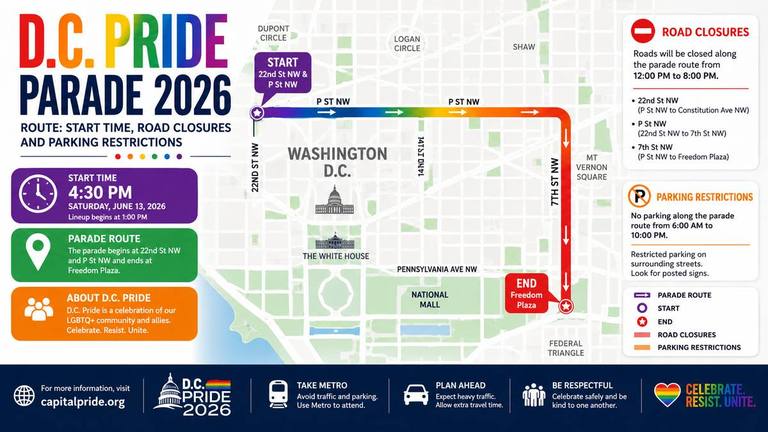
The Capital Pride Parade steps off Saturday, June 20, with closures affecting 14th Street NW, Pennsylvania Avenue NW and downtown routes. Here is what drivers, residents and Metro riders need to know before heading out.
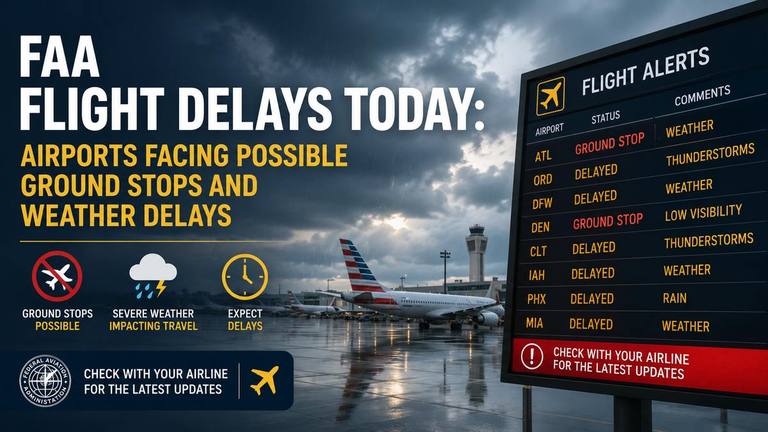
The FAA’s current operations plan lists several airports where weather or event volume could trigger ground stops or ground delay programs today. Travelers should check airline apps and official airport or FAA status pages before heading to the airport.