 orywire
News that matters globallyReporting on public life and major developments across the U.S., the UK, and beyond.
orywireThe National Weather Service says a heat advisory remains in effect for Houston and many Southeast Texas communities through Saturday night. Heat index values could reach 107 to 112 degrees, making air conditioning, hydration and limited outdoor activity important.
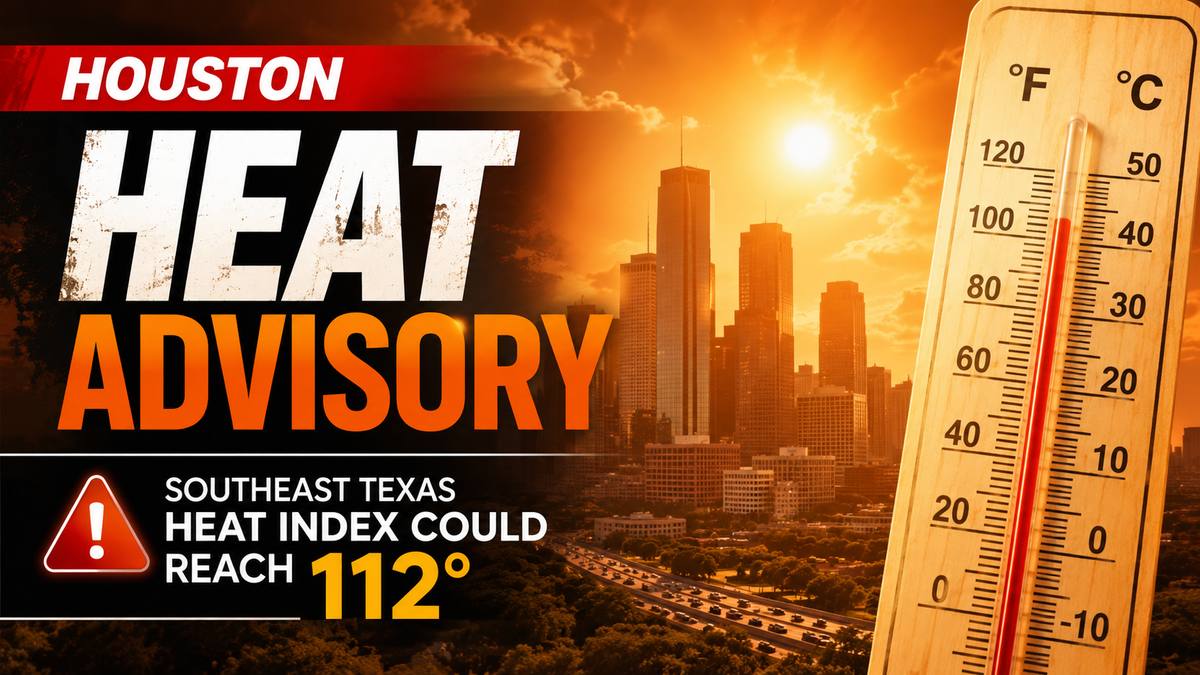
A heat advisory remains in effect for Houston and many Southeast Texas communities until 10 p.m. CDT Saturday, June 20, with heat index values expected to climb as high as 112 degrees, the National Weather Service said. Residents should use air conditioning when possible, limit strenuous outdoor activity and check on neighbors who may be more vulnerable to the heat.
The National Weather Service Houston/Galveston office continued the heat advisory at 12:52 a.m. CDT Friday. The alert covers portions of south-central and Southeast Texas.
The advisory includes Houston and many surrounding communities, including Galveston, Pearland, Sugar Land, Baytown, The Woodlands, College Station, Bryan, Huntsville and other areas listed in the weather service alert.
The weather service said highs across Southeast Texas are expected to reach about 90 to 95 degrees, but humidity will make it feel much hotter. Dangerous heat index values between 107 and 112 degrees are expected.
The heat index is the “feels like” temperature when humidity is factored in. High humidity can make it harder for the body to cool itself, increasing the risk of heat exhaustion or heat stroke during prolonged time outdoors.
The Houston/Galveston weather office lists a heat advisory threshold at a heat index of at least 108 degrees or an air temperature of at least 103 degrees possible. An advisory is not the highest heat alert, but the weather service says hot temperatures and high humidity may cause heat illnesses.
The risk is higher for people working outside, people without reliable air conditioning, older adults, young children, people with some medical conditions and anyone doing strenuous activity during the hottest part of the day.
The weather service recommends drinking plenty of fluids, staying in an air-conditioned room, staying out of the sun and checking on relatives and neighbors. It also urges people outside to wear lightweight, loose-fitting clothing and to move strenuous activity to the early morning or evening when possible.
The Houston Office of Emergency Management says residents should not rely on a fan as their main cooling device because fans create airflow but do not lower body temperature. The city also advises people to identify places where they can cool off, use cooling centers or air-conditioned facilities if needed, and never leave infants, children, older adults or pets unattended in parked vehicles.
Outdoor workers and people exercising outside should take frequent breaks in shade or air conditioning and drink water before they feel thirsty. Pets should be brought indoors when possible and given plenty of cool water.
The National Weather Service says symptoms of heat exhaustion can include heavy sweating, weakness or tiredness, cool or clammy skin, muscle cramps, dizziness, nausea, vomiting, headache or fainting. Someone with those symptoms should be moved to a cooler place, given small sips of water if able and cooled with wet cloths or a cool bath.
Heat stroke is a medical emergency. Warning signs can include confusion, slurred speech, fainting, loss of consciousness, a body temperature above 103 degrees, hot red skin that may be dry or damp, and a rapid strong pulse. Call 911 immediately if heat stroke is suspected.
The advisory could be extended, modified or canceled if the forecast changes. Residents should check the National Weather Service Houston/Galveston office before outdoor plans Friday afternoon and Saturday, and Houston residents can also use the city’s emergency management resources for cooling center information and local alerts.