 orywire
News that matters globallyReporting on public life and major developments across the U.S., the UK, and beyond.
orywireUKHSA says England has recorded 736 laboratory-confirmed measles cases so far in 2026, with two child deaths confirmed. The latest figures show recent activity has been highest in London, the East of England and the West Midlands.
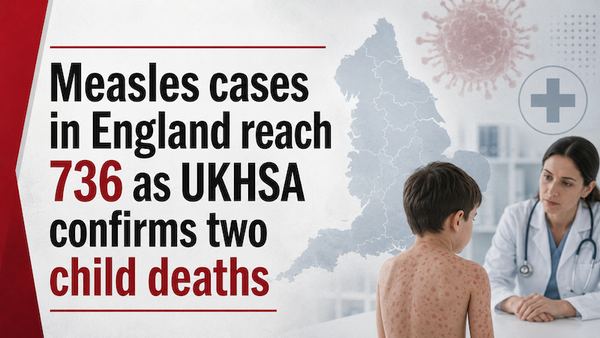
The UK Health Security Agency (UKHSA) has reported 736 laboratory-confirmed measles cases in England between 1 January and 8 June 2026, with two child deaths confirmed so far this year. Families are being urged to check that children are up to date with measles vaccination and to contact their GP surgery if a dose has been missed.
The latest UKHSA update added 106 laboratory-confirmed cases since the previous report on 25 May. The 2026 total now stands at 736, compared with 959 cases for the whole of 2025.
UKHSA says the figures are provisional because suspected cases can still be confirmed or discarded after further testing. Its next scheduled measles data update is 25 June.
By month of symptom onset, UKHSA listed:
Since January, London has accounted for 404 of the 736 cases, or 55%. The West Midlands has recorded 136 cases, while the North West has recorded 77.
All English regions have reported at least one confirmed case with symptom onset since January. In the most recent four-week period covered by the data, activity was highest in London, the East of England and the West Midlands.
The local authority totals since January were highest in Enfield, with 111 cases, followed by Birmingham with 79. Haringey and Islington each had 49. UKHSA’s table suppresses local authority counts below 10 cases.
For the four weeks from 11 May to 8 June, the highest listed local authority figures were Hertfordshire with 19 cases, Worcestershire with 16 and Harrow with 10.
UKHSA said two measles-related deaths in children have been reported in England so far in 2026. Its epidemiology update says one was an acute measles death in a child and the other was a child death due to late effects of measles.
The agency’s separate deaths table says the 2026 figures are based on provisional real-time reporting. It also notes that measles deaths can include deaths after a short acute illness, later complications or long-term effects.
Children aged 10 and under account for 449 of the 736 confirmed cases in England this year. UKHSA said the majority of cases have been in unvaccinated children aged 10 years and under.
The age breakdown shows 91 cases in children under one, 205 in children aged one to four, and 153 in children aged five to 10. There have also been 247 cases in people aged 15 and over.
The NHS says the MMRV vaccine and MMR vaccine can prevent measles. MMR means measles, mumps and rubella. MMRV means measles, mumps, rubella and varicella, which is chickenpox.
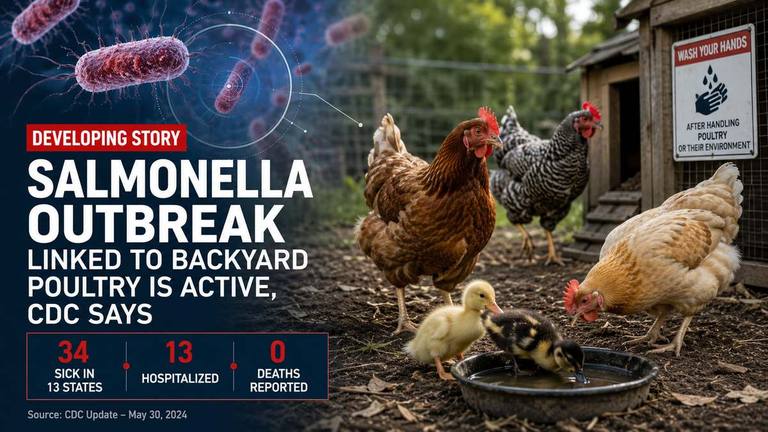
CDC says multistate Salmonella outbreaks linked to backyard poultry remain open, with 513 reported illnesses, 134 hospitalizations and one death. Families and flock owners are urged to wash hands, keep birds outside the home and keep young children away from chicks and ducklings.
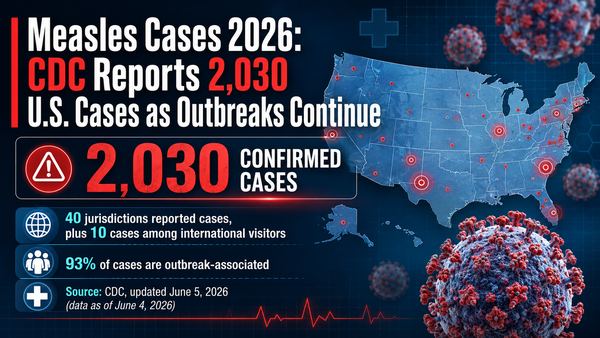
The CDC says 2,030 confirmed measles cases have been reported in the United States in 2026, with most cases tied to outbreaks. The latest update also explains why state counts may differ from the national total.
Young children are offered two doses of MMRV, usually at 12 months and 18 months. Older children and adults who missed MMR when they were younger can ask their GP surgery about catching up.
The NHS says people need two doses of MMR for full protection. A GP surgery should be able to check which vaccinations a person has already had.
The NHS says measles usually starts with cold-like symptoms, including a high temperature, runny or blocked nose, sneezing, cough and red, sore, watery eyes. A rash usually appears a few days later and may start on the face and behind the ears before spreading.
Anyone who thinks they or their child may have measles should ask for an urgent GP appointment or get help from NHS 111. The NHS says people should call their GP surgery before going in, because measles can spread easily.
After medical advice, anyone with measles should stay off nursery, school or work for at least four days from when the rash first appears. The NHS also advises avoiding close contact with babies and anyone who is pregnant or has a weakened immune system.
UKHSA updates measles data every other week. The agency says the most recent weeks are likely to underestimate activity because of reporting delays.
The next scheduled update is 25 June. Figures, affected areas and confirmed deaths should be checked again if UKHSA publishes new data or issues further public health advice before then.
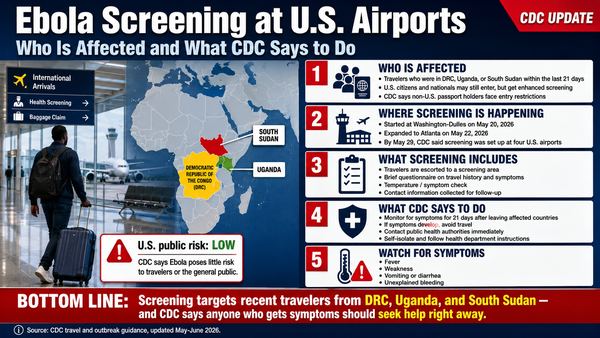
CDC says certain travelers who were recently in the Democratic Republic of the Congo, Uganda or South Sudan may be routed to four U.S. airports for enhanced Ebola screening. The agency says the U.S. risk remains low, but affected travelers should monitor symptoms for 21 days after leaving those countries.