 orywire
News that matters globallyReporting on public life and major developments across the U.S., the UK, and beyond.
orywireCDC reported 2,104 confirmed measles cases in the United States in 2026 as of its June 18 update, with resident cases reported by 41 jurisdictions. Most confirmed cases are linked to outbreaks, and state health departments may post local exposure updates before CDC’s national page changes.
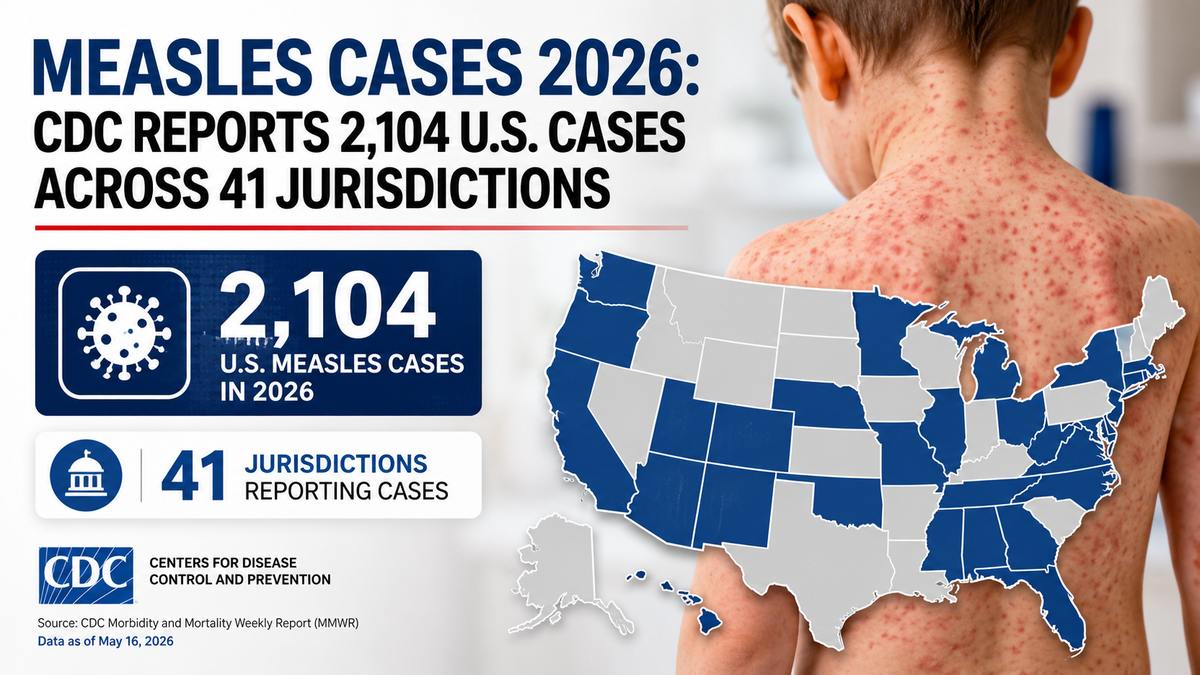
CDC’s latest national measles update lists 2,104 confirmed cases in the United States in 2026, with resident cases reported by 41 jurisdictions and 11 additional cases among international visitors. The agency says most of this year’s confirmed cases are tied to outbreaks, and readers looking for exposure notices should check CDC and their state or local health department for updates.
CDC’s June 18 update says 2,104 confirmed measles cases were reported in the United States in 2026. Of those, 2,093 were reported by 41 jurisdictions and 11 were reported among international visitors.
CDC notes that its national page includes confirmed cases reported to the agency. Probable cases can appear on state health pages before they are reflected in CDC’s national count.
CDC reported 30 new outbreaks in 2026. The agency said 93% of confirmed cases — 1,957 of 2,104 — are outbreak-associated. That total includes 613 cases from outbreaks that began in 2026 and 1,344 from outbreaks that began in 2025.
For CDC reporting, a measles outbreak means three or more related cases. The current 2026 count is below but close to the full-year 2025 total of 2,288 confirmed cases.
The resident cases in CDC’s June 18 update were reported by Alaska, Arizona, California, Colorado, Connecticut, District of Columbia, Florida, Georgia, Idaho, Illinois, Kansas, Kentucky, Louisiana, Maine, Maryland, Massachusetts, Michigan, Minnesota, Missouri, Montana, Nebraska, New Jersey, New Mexico, New York City, New York State, North Carolina, North Dakota, Ohio, Oklahoma, Oregon, Pennsylvania, Rhode Island, South Carolina, South Dakota, Texas, Utah, Vermont, Virginia, Washington, Wisconsin, and Wyoming.
CDC treats New York City and New York State as separate reporting jurisdictions for this list.
State, local, tribal and territorial health departments lead measles investigations, then notify CDC. CDC says its national and state counts can differ because agencies post on different schedules and because CDC’s national page includes only confirmed cases notified to the agency.
CDC points readers to real-time state pages, including updates from Arizona, Utah, South Carolina, Michigan and Virginia. At this check, Utah’s health department listed local outbreak counts and exposure locations, while Virginia’s health department listed a confirmed Buckingham County outbreak and a June 17 exposure at Dulles International Airport. For exposure sites, vaccination clinics and local isolation instructions, state and local health departments are the place to check first.
CDC says measles symptoms usually appear 7 to 14 days after contact with the virus. Early symptoms commonly include high fever, cough, runny nose and red, watery eyes; a rash usually appears 3 to 5 days after symptoms begin.
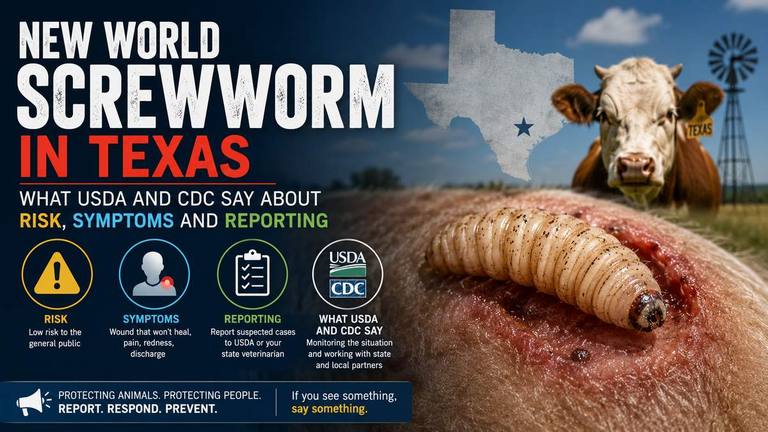
USDA confirmed New World screwworm in a Texas calf on June 3, and state and federal agencies are urging fast reporting of suspicious animal wounds. CDC says no locally acquired human infestations have been reported in the United States, but people and animal owners should know the symptoms and reporting steps.
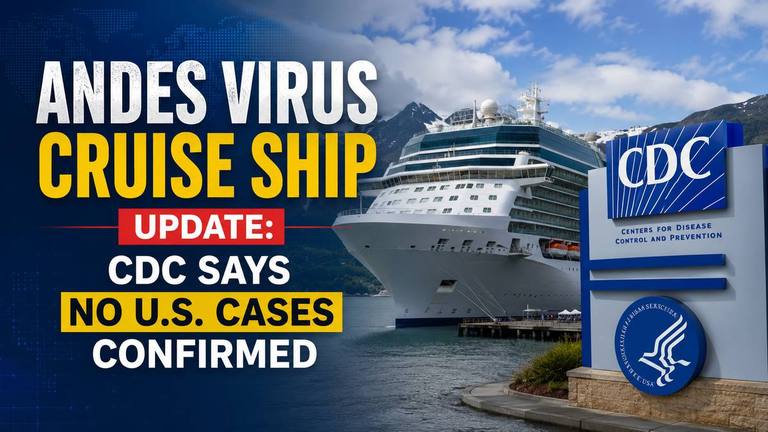
CDC says no Andes virus cases tied to the M/V Hondius cruise-ship outbreak have been confirmed in the United States. The agency says the overall risk to the American public and travelers remains extremely low while exposed passengers complete monitoring.
People who think they were exposed or develop symptoms should call a healthcare provider or local health department before going to a clinic or emergency room, so staff can help avoid exposing others. CDC and state health pages also advise exposed people to monitor for symptoms; Virginia tells exposed people to watch for 21 days.
CDC says two doses of MMR are the best protection against measles, mumps and rubella. Children are generally recommended to get the first dose at 12 to 15 months and the second at 4 to 6 years; adults without evidence of immunity generally need at least one dose, with some higher-risk adults advised to get two.
CDC says one dose of MMR is 93% effective against measles and two doses are 97% effective. International travelers who are not protected should plan to be vaccinated at least two weeks before departure; if travel is sooner than that, CDC says they should still get a dose.
CDC’s next national update may revise the total case count, the jurisdiction list, the number of outbreaks and the share of cases linked to outbreaks. State health departments may update exposure locations or local recommendations sooner than the national page.
Readers should use CDC for the national count and their state or local health department for recent exposure notices, school or childcare guidance, and local vaccine recommendations.
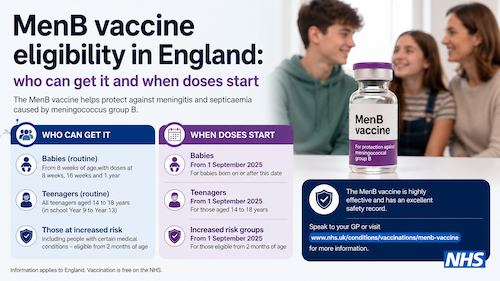
The one-off MenB vaccine programme covers Year 13 pupils and under-25s starting university or some residential further education for the first time. NHS public information says the offer starts from 20 July 2026, with two doses needed for protection.