 orywire
News that matters globallyReporting on public life and major developments across the U.S., the UK, and beyond.
orywireUSDA confirmed New World screwworm in a Texas calf on June 3, and state and federal agencies are urging fast reporting of suspicious animal wounds. CDC says no locally acquired human infestations have been reported in the United States, but people and animal owners should know the symptoms and reporting steps.

USDA confirmed New World screwworm in Texas on June 3, and animal-health officials are urging livestock owners, pet owners and veterinarians to report suspicious wounds quickly. CDC says no locally acquired human infestations have been reported in the United States, and the current risk to people remains low but can be higher in areas where New World screwworm flies are circulating.
The first confirmed U.S. animal case in the current outbreak was a 3-week-old calf in Zavala County, Texas, with larvae in its umbilical area. Since then, Texas animal-health officials have listed cases in six Texas counties and 10 premises, with movement controls in parts of several counties.
New World screwworm is a parasitic fly whose larvae feed on the living tissue of warm-blooded animals. It primarily affects livestock, pets and wildlife, but people can be infested in rare cases.
The fly is attracted to wounds and body openings such as the eyes, ears, nose, mouth, genitals and the navel of newborn animals. Eggs hatch into larvae that burrow into tissue, which can make wounds larger, deeper and painful.
Texas health officials describe it mainly as an agricultural and animal-health threat. Early detection matters because untreated animal infestations can become severe or fatal.
The Texas Animal Health Commission says there is a quarantine tied to established New World screwworm infested zones in parts of Coke, Edwards, Gillespie, Kerr, Kimble, La Salle, Schleicher, Sutton, Tom Green, Uvalde, Val Verde, Webb and Zavala counties.
Warm-blooded animals in an infested zone may not move out of that zone without prior authorization from the commission. Animals moving out of a zone must be inspected, and an animal movement certificate must accompany the movement.
USDA and Texas officials have said the response includes surveillance, case tracing, fly trapping, sterile-fly releases, animal movement controls and outreach to animal owners. The USDA dashboard is meant to show confirmed animal cases and wild fly detections by county, state, animal type, confirmation date and status.
CDC says there have been no reports of locally acquired human New World screwworm infestations in the United States. The agency says the risk to people remains low and is localized to places where the flies are present.
People may face higher risk if they are in an area where the flies are circulating and have an open wound, spend long periods outdoors, sleep outdoors during the day, work around livestock or other warm-blooded animals, or have a condition that causes open sores.
Texas health officials also say New World screwworm infestation does not spread directly from one person or animal to another. The concern is that adult flies can lay eggs on wounds or body openings in people or animals in the same area.
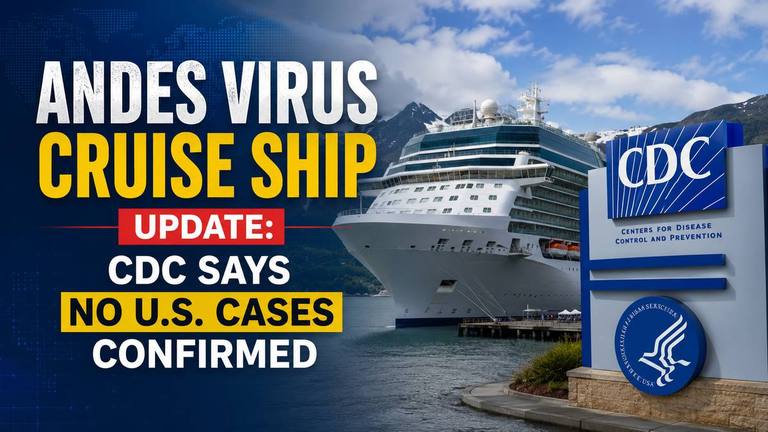
CDC says no Andes virus cases tied to the M/V Hondius cruise-ship outbreak have been confirmed in the United States. The agency says the overall risk to the American public and travelers remains extremely low while exposed passengers complete monitoring.
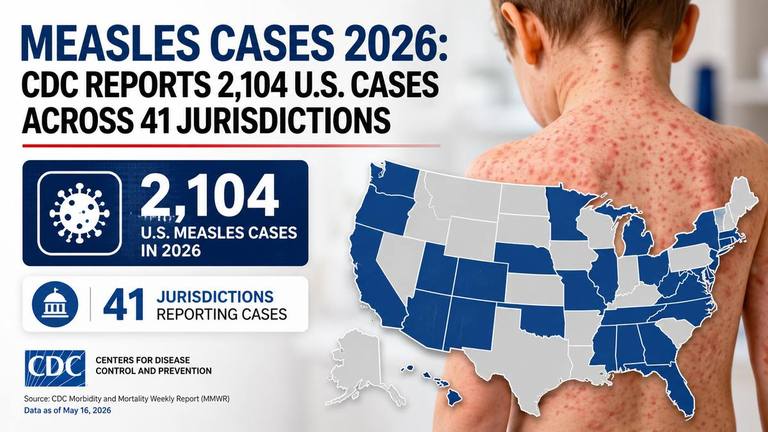
CDC reported 2,104 confirmed measles cases in the United States in 2026 as of its June 18 update, with resident cases reported by 41 jurisdictions. Most confirmed cases are linked to outbreaks, and state health departments may post local exposure updates before CDC’s national page changes.
In people, CDC and Texas health officials say symptoms can include seeing larvae in or around a wound, feeling movement in a wound or body opening, painful sores that worsen within a few days, a foul smell from the site, bleeding from open sores, and fever or chills if a secondary bacterial infection develops.
Animal owners should look for maggots or egg masses in or around wounds or body openings, draining or enlarging wounds, a foul odor, and signs of pain. In livestock and pets, warning signs can include irritated behavior, depression, not eating, isolation, discharge from wounds, or visible larvae near the nose, ears, genitals or the navel of newborn animals.
Pet owners should check animals daily for wounds, including old tick bites. Texas health officials say owners should not try to remove maggots or treat a suspected infestation on their own.
For people: Contact a healthcare provider immediately if you see or feel larvae in a wound or suspect a New World screwworm infestation. Healthcare providers should contact the local or state health department for reporting and testing guidance.
For livestock in Texas: Call a veterinarian and report the suspected case to the Texas Animal Health Commission at 1-800-550-8242 or through a local TAHC regional office. TAHC says New World screwworm should be reported within 24 hours of suspicion.
For pets in Texas: Contact a veterinarian and the Texas Animal Health Commission. Do not attempt at-home removal or treatment.
For wildlife in Texas: Contact Texas Parks and Wildlife through a local wildlife biologist. Outside Texas, USDA says suspected wildlife cases near the U.S.-Mexico border can be reported to USDA Wildlife Services.
Animal owners should avoid moving suspected animals until a veterinarian or animal-health official gives instructions. Moving an infested animal can make response and containment harder.
Human treatment requires a healthcare professional to remove all larvae. CDC says suspected human cases should be reported immediately to the local public health jurisdiction, and providers can work with public health officials on diagnostic submission when needed.
For animals, treatment should be handled by a veterinarian. FDA has listed approved, conditionally approved or emergency-authorized animal drugs for New World screwworm prevention or treatment in certain species, but the right approach depends on the animal and the case.
Texas and federal officials have said the food supply is safe from New World screwworm. Texas health officials say meat inspectors are trained to identify suspicious larvae, and the Texas Animal Health Commission says adulterated product from an affected animal would not be allowed into commerce.
The practical guidance could change if USDA or Texas officials confirm new affected areas, adjust quarantine zones, update animal movement rules or report a locally acquired human case.
Readers who own livestock, pets or other animals in affected areas should monitor the USDA current-status page, the Texas Animal Health Commission page and local public health guidance. The most important step remains early reporting of suspicious wounds, maggots or larvae.
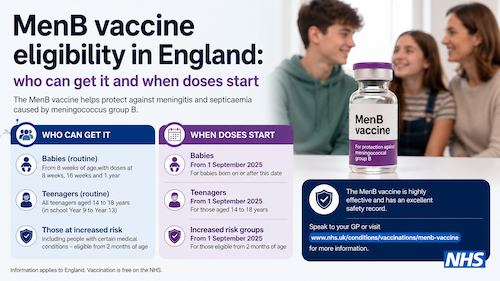
The one-off MenB vaccine programme covers Year 13 pupils and under-25s starting university or some residential further education for the first time. NHS public information says the offer starts from 20 July 2026, with two doses needed for protection.