 orywire
News that matters globallyReporting on public life and major developments across the U.S., the UK, and beyond.
orywireNHTSA says Waymo is recalling 3,871 fifth-generation automated driving systems because the software may let autonomous vehicles enter closed freeway construction zones and keep driving at speed. Waymo has restricted freeway driving while a software remedy is under development.
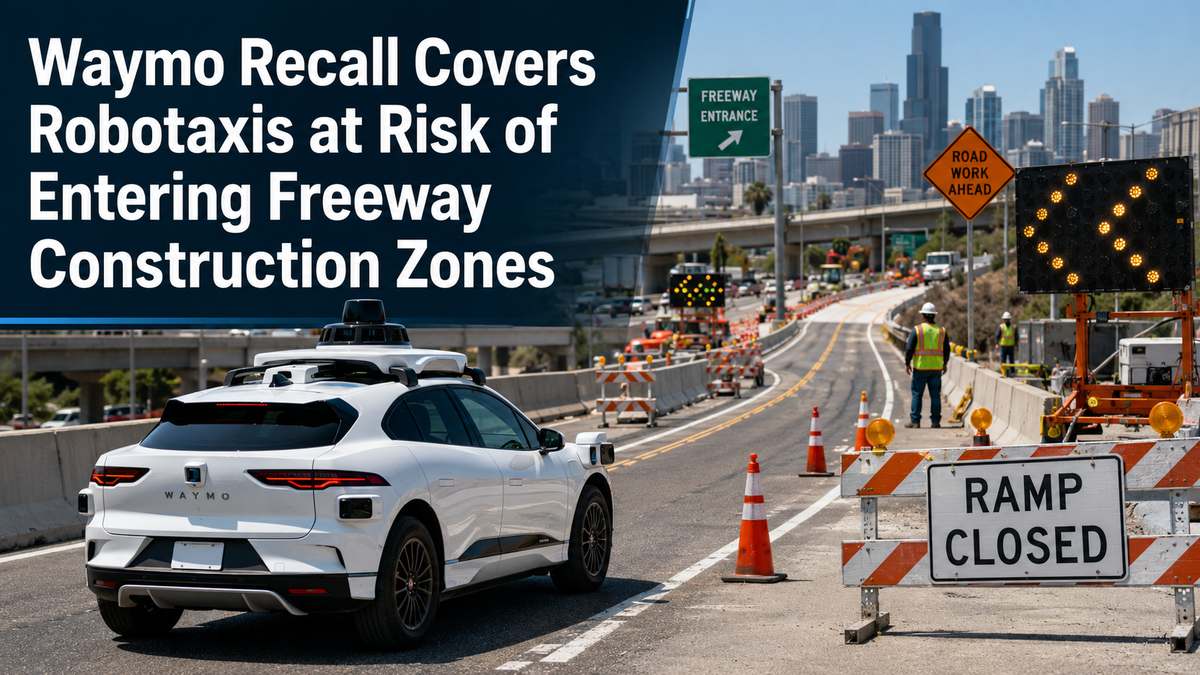
Waymo is recalling 3,871 fifth-generation automated driving systems used in its autonomous vehicle fleet after federal safety filings said the software may allow vehicles to enter closed freeway construction zones and continue driving at speed. Waymo has restricted freeway driving while it develops a software remedy, according to the National Highway Traffic Safety Administration.
The recall covers Waymo’s 5th Generation Automated Driving System, or ADS. NHTSA lists the affected equipment as Waymo 5th Generation ADS units produced from March 17, 2022, through May 19, 2026.
The filing says the recalled systems are the ones capable of driverless freeway operation. Waymo determined the affected population using information about each vehicle’s driverless capabilities and software, and the company owns all potentially affected vehicles.
That matters for the remedy process. This is not a typical consumer recall in which private owners wait for mailed notices or schedule dealer appointments. NHTSA’s filing says Waymo owns the affected vehicles and will apply the remedy, so there is no need for owner, dealer or distributor notifications.
NHTSA’s recall documents say that, under certain circumstances, a Waymo autonomous vehicle may enter and drive at speed in freeway construction zones. The filing points to two possible software behaviors: the system may inappropriately prioritize avoiding other freeway hazards, or it may fail to recognize the construction zone.
The safety risk is straightforward. Driving through a closed construction zone at freeway speed increases the potential for collisions, especially where cones, ramp closures, workers, lane shifts or other vehicles may be present.
The recall is listed under NHTSA campaign number 26E035.
The NHTSA chronology describes two clusters of events.
In Phoenix, Waymo’s Field Safety Committee reviewed one event from April 11 and five events from April 19 in which Waymo autonomous vehicles did not recognize ramp-closure signs and drove into pre-planned freeway construction zones. The company then implemented freeway-driving restrictions until operational mitigations could be added.
In the San Francisco Bay Area, the filing says seven Waymo vehicles entered freeway lanes with active construction on May 18 by driving between cones that marked a lane closure in an adjacent lane. Waymo’s Field Safety Committee met the next day and again restricted freeway driving while the company worked to identify and address root causes.
Waymo’s Safety Board reviewed the issue on June 1 and decided on June 8 to conduct a recall.
NHTSA’s acknowledgment letter says the remedy is currently under development. In the interim, Waymo modified the scope of vehicle operations to restrict freeway driving.
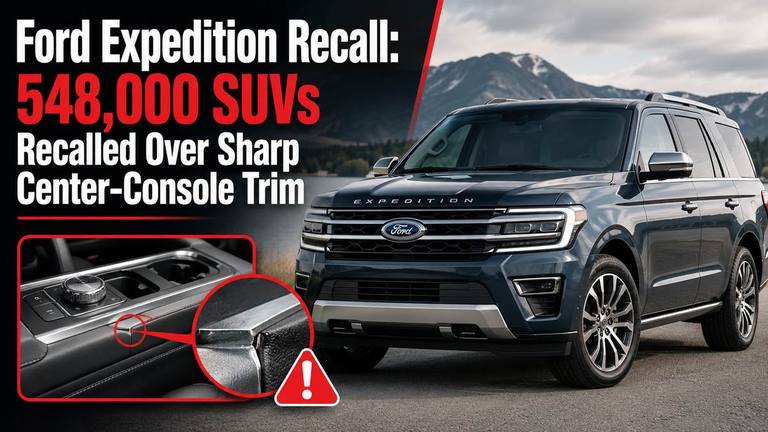
Ford is recalling certain 2018–2024 Expedition SUVs because peeling chrome trim on the center console may create sharp edges. Owners should check their VIN and watch for Ford’s mail notices before scheduling the free dealer inspection.
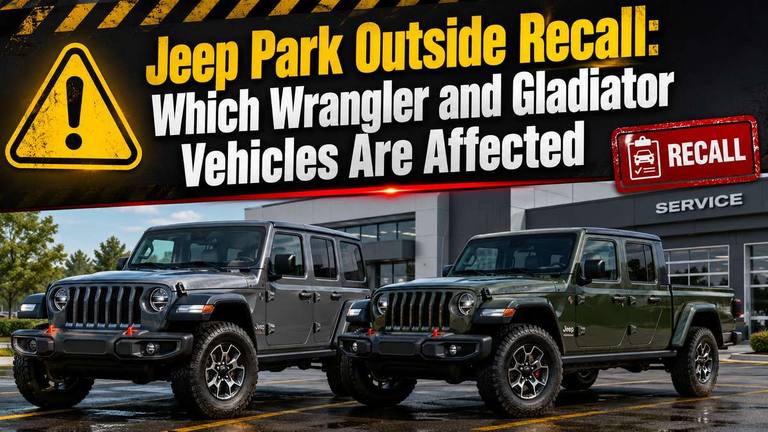
FCA US is recalling more than 1 million 2021-2025 Jeep Wrangler and Gladiator vehicles over a fire risk tied to power-steering pump wiring. NHTSA says affected owners should park outside and away from buildings and other vehicles until repairs are made.
The planned remedy is a software update intended to help the ADS detect when a vehicle is in a construction zone and avoid entering construction zones. NHTSA says the update will be provided free of charge.
Waymo said in statements to news outlets that it voluntarily restricted freeway operations last month while making improvements and notified state and federal regulators. CBS News reported that a Waymo spokesperson said the company continued to serve riders on surface streets in the cities where it operates.
For riders, the most visible effect may be route availability. If freeway operation is restricted, a Waymo trip may be unavailable, rerouted or limited depending on the service area and trip request.
For private vehicle owners, the filing does not identify a consumer action step. Waymo owns the affected vehicles and is responsible for applying the software remedy.
For other road users, the issue is a construction-zone safety matter rather than a passenger-car repair notice. NHTSA’s concern is the possibility that an autonomous vehicle could enter a closed freeway work zone at speed before the final remedy is deployed.
The key unresolved item is the final remedy status. NHTSA’s acknowledgment letter says the remedy is under development, and the Part 573 filing says Waymo will update the filing once a remedy is deployed.
The next material update would be an amended NHTSA filing or a Waymo statement saying the software remedy has been deployed and explaining whether freeway restrictions have changed.
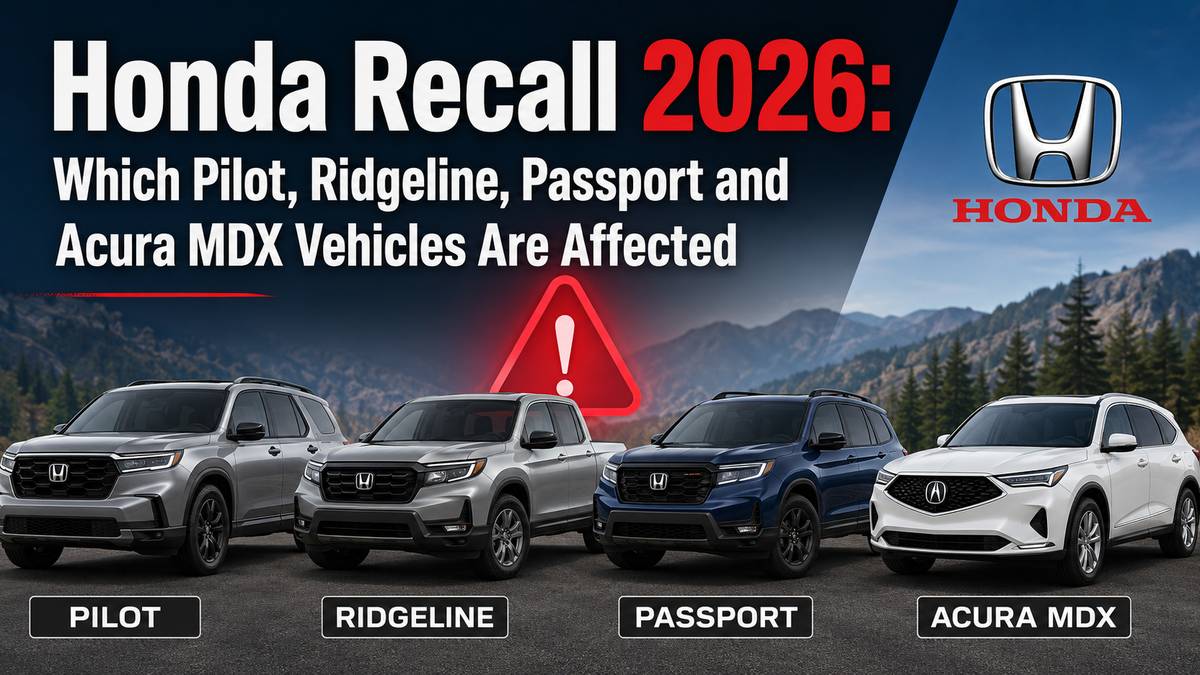
Honda is recalling 880,514 Pilot, Ridgeline, Passport and Acura MDX vehicles over a rear subframe corrosion risk. Owners should check their VIN and schedule a free dealer inspection if their vehicle is included.