 orywire
News that matters globallyReporting on public life and major developments across the U.S., the UK, and beyond.
orywireThe FAA has extended flight limits affecting JFK, LaGuardia and Newark to manage congestion and air traffic control constraints. Travelers should know the airport timelines, how airline schedules may change and what to check before booking or flying.

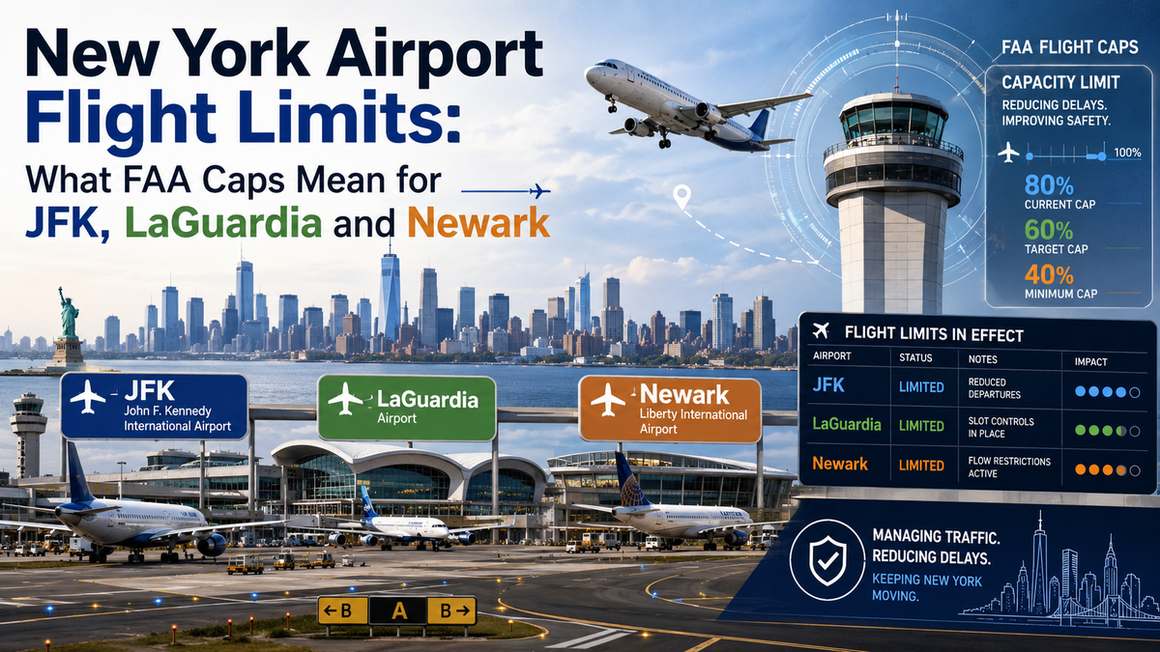
The FAA has extended flight limits that affect New York’s three largest airports: John F. Kennedy International, LaGuardia and Newark Liberty. For travelers, the limits do not mean the airports are closed, but they can shape how many flights airlines schedule and may lead to fewer options or schedule changes on some routes.
At JFK, the FAA order remains effective until Oct. 28, 2028. The order governs scheduled arrivals and departures from 6 a.m. through 10:59 p.m. ET and keeps the hourly limit at 81 scheduled operations during those hours.
At LaGuardia, the FAA also extended the operating-limit order until Oct. 28, 2028. The order covers scheduled arrivals and departures from 6 a.m. through 9:59 p.m. ET Monday through Friday and from noon through 9:59 p.m. ET Sunday. The FAA maintains 71 scheduled operating authorizations per hour during slot-controlled hours, plus three unscheduled operations; some existing operations above that threshold can remain until they are surrendered, withdrawn or unassigned.
Newark is already under a separate FAA order limiting operations. The new action extends that order through Oct. 30, 2027. From Oct. 25, 2026, through Oct. 30, 2027, the FAA says it will continue limiting scheduled operations to 36 arrivals and 36 departures per hour.
The FAA said the limits are meant to reduce congestion and keep schedules closer to what the airports and air traffic system can reliably handle. At JFK, the agency said demand remains higher than scheduling limits in multiple hours and warned that severe congestion-related delays could ripple through other airports without the order.
At LaGuardia, the agency pointed to limited runway capacity and continued high demand. At Newark, the FAA cited continuing air traffic control staffing deficiencies and said certified controller staffing would not significantly improve before the close of the Summer 2027 scheduling season.
The FAA also extended a staffing-related waiver for JFK and LaGuardia through Summer 2027. That waiver allows carriers to return up to 10% of their slots at each airport without losing historical rights, a step the agency said is intended to reduce the total number of operations in the New York City region.
The limits are mostly felt through airline schedules, not at the security checkpoint. Airlines may keep fewer flights in peak hours, adjust departure times, combine demand on larger aircraft or change schedules before travel dates.
The FAA said it expects carriers using the JFK and LaGuardia waiver to up-gauge aircraft where possible, meaning airlines may use larger planes to preserve passenger capacity while operating fewer flights. The agency also said returned JFK and LaGuardia slots will not be reallocated during the waiver period because the goal is to reduce total flight volume.
That does not mean a specific booked flight will be canceled. It does mean travelers should watch reservation emails and app alerts closely, especially if flying during afternoon or evening peak periods.
Compare all three New York-area airports before buying a ticket. A slightly different route through JFK, LaGuardia or Newark may offer a better schedule, more backup flights or a longer connection window.
Build in extra time for connections, especially if your itinerary depends on a late-day arrival or a same-day connection. The FAA identified the most delay-prone waiver return periods as 1 p.m. to 10:59 p.m. ET at JFK and 1 p.m. to 9:59 p.m. ET at LaGuardia. Those periods are not a guarantee of delay, but they are worth considering when booking a tight trip.
Before leaving for the airport, check the airline app or website first. The FAA’s daily air traffic page also tells travelers to check with their air carrier for flight-specific delay information and points travelers to FAA operations updates for systemwide air traffic conditions.
If an airline cancels your flight or significantly changes it, the Transportation Department says you are entitled to a refund if you choose not to travel or accept a credit, voucher or alternative transportation. DOT’s refund guidance also says airlines must notify passengers about cancellations, significant delays or significant changes and the right to a refund.
Travelers who still want to take the trip should act quickly on rebooking options. Seats on nearby flights can fill faster when schedules are tight, especially at airports where flights are already capped.
The next official checkpoint is the scheduled Federal Register publication of the FAA actions on June 23, 2026. Travelers should still rely on their airline for flight-specific changes, because the FAA orders set scheduling limits but airlines control individual itineraries.

The FAA is investigating after Delta Air Lines Flight 2351 executed a go-around at Boston Logan while another aircraft was departing from an intersecting runway. Delta said the flight landed safely and passengers deplaned normally.
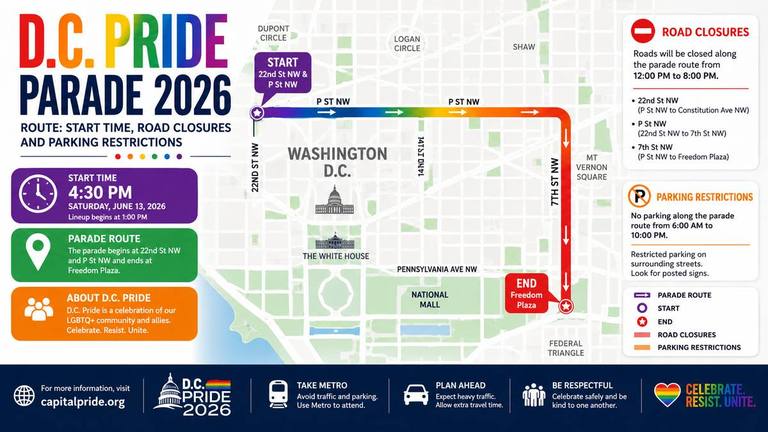
The Capital Pride Parade steps off Saturday, June 20, with closures affecting 14th Street NW, Pennsylvania Avenue NW and downtown routes. Here is what drivers, residents and Metro riders need to know before heading out.
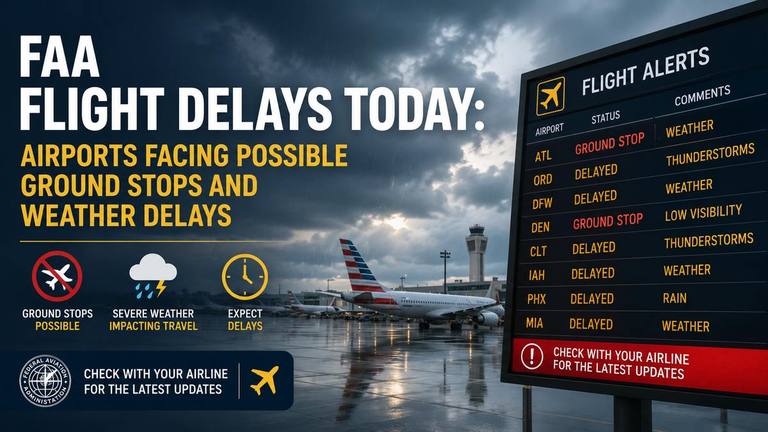
The FAA’s current operations plan lists several airports where weather or event volume could trigger ground stops or ground delay programs today. Travelers should check airline apps and official airport or FAA status pages before heading to the airport.