 orywire
News that matters globallyReporting on public life and major developments across the U.S., the UK, and beyond.
orywireThe FAA said thunderstorms could delay flights around Atlanta, Dallas-Fort Worth, Houston and several Florida airports on Wednesday, with low clouds also listed for Denver and San Francisco. Travelers should check airline status, airport updates and FAA traffic advisories before leaving for the airport.
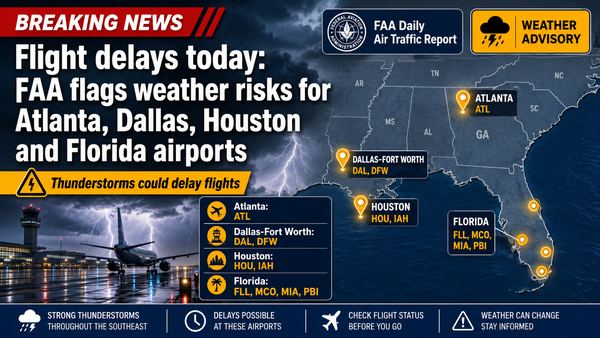
The FAA’s latest daily air traffic outlook lists weather-related delay risks Wednesday for several major airport regions, including Atlanta, Dallas-Fort Worth, Houston, South Florida and Orlando. FAA operations advisories also flagged traffic-management measures focused on Houston and San Francisco. Travelers should verify their exact flight with their airline before heading to the airport because airport-wide forecasts do not mean every flight is delayed.
The FAA said thunderstorms could delay flights in Atlanta, Dallas-Fort Worth, Houston and Florida, specifically listing ATL, DAL, DFW, HOU, IAH, FLL, MCO, MIA and PBI. The agency also listed low clouds in Denver and San Francisco.
In FAA Air Traffic Control System Command Center materials checked Wednesday afternoon, terminal constraints were listed for FLL, MIA, IAH and HOU because of thunderstorms in the vicinity, while LAS and SFO were listed for wind. The most recent ATCSCC advisory available at last check proposed a ground delay program for IAH because of weather and thunderstorms, with anticipated average delays of 86 minutes and maximum delays of 195 minutes.
Weather is creating a risk of traffic-management programs at several airport groups. The FAA’s daily report is an operations-planning outlook, not a flight-by-flight status board, so the listed airports should be treated as places where delays are possible or already being managed.
FAA planning materials also listed possible ground stops or delay programs for Houston airports, Denver and the South Florida airport group that includes Miami, Fort Lauderdale and Palm Beach.
The FAA confirmed Wednesday’s weather delay risk for Atlanta, Dallas-Fort Worth, Houston, Florida, Denver and San Francisco airport operations.
Checked FAA sources did not say those listed airports were closed. The confirmed issue is delay risk and traffic-flow management, not a blanket shutdown.
The FAA also confirmed that passengers should check with their air carrier for flight-specific delay information.
Individual flight delays, gate changes and cancellations remain airline-specific. The FAA outlook does not confirm whether a specific traveler’s flight is late.
It also remains unclear which possible ground stops or delay programs will be issued, extended, reduced or canceled later Wednesday as weather changes.
The FAA said travelers should use its National Airspace System status tools for up-to-the-minute air traffic operations information and should always check with their air carrier for flight-specific delay information.
The U.S. Department of Transportation says airlines must notify travelers about cancellations and significant delays or changes, including refund rights when a traveler chooses not to travel or accept an alternative offered by the airline.
The biggest same-day travel concern is for passengers flying through the listed major hubs and connecting airports, especially where thunderstorms can slow arrivals and departures.
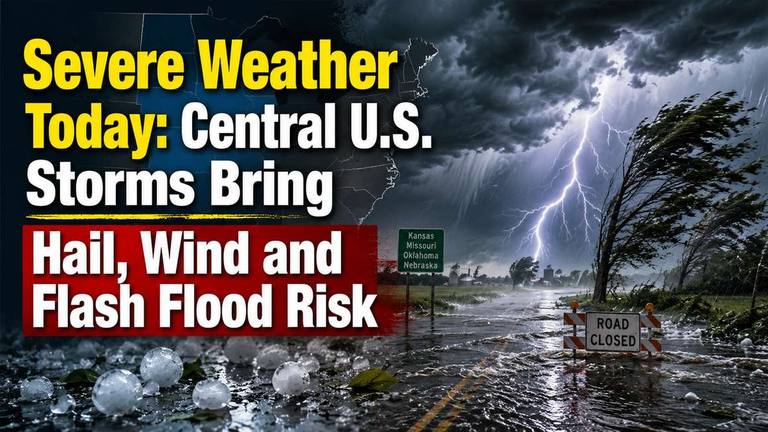
NWS outlooks place parts of the Central U.S. under severe thunderstorm and heavy rainfall concerns today. Large hail, damaging winds, tornadoes and flash flooding are possible from the central Plains toward the Midwest and Ohio Valley.
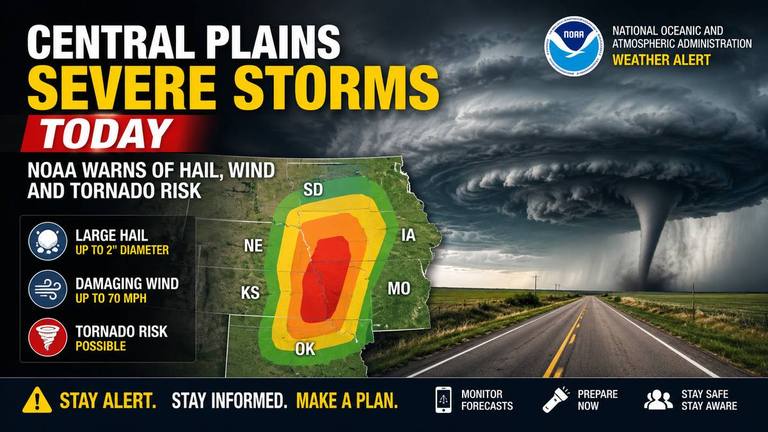
NOAA’s Storm Prediction Center placed parts of the Central Plains under an Enhanced Risk for severe storms Saturday, with large hail, damaging wind and a few tornadoes possible. The greatest risk is expected this afternoon and evening, with flash flooding possible into early Sunday.
A delay at one hub can also affect later flights elsewhere because aircraft and crews may arrive late. Travelers with tight connections should pay close attention to rebooking options in their airline app.
Before leaving for the airport, check your airline app or website, airport departure board and any airline travel alerts for your route. Turn on push, text or email notifications for gate changes and delay updates.
If your flight is delayed, confirm whether the airline still expects you at the airport at the original check-in time. If you have a connection through an affected airport, look for backup routings before seats fill.
If your flight is canceled or significantly changed, review the airline’s rebooking offer and your refund options before accepting a credit or alternate itinerary.
A ground delay program holds some arriving flights at their departure airports to manage congestion at the destination. A ground stop is a more restrictive temporary hold for flights bound for a specific airport or airspace.
Those tools are common during thunderstorms, low clouds, strong winds or other conditions that reduce arrival and departure capacity. They do not automatically mean an airport is closed.
This is a developing travel advisory and should be refreshed with FAA and airline-specific status updates as conditions change Wednesday.

Parts of the Upper and Mid Mississippi valleys and Midwest face an Enhanced Risk for severe storms Wednesday, with tornadoes, large hail and damaging winds possible. Residents should monitor National Weather Service alerts and be ready to shelter if warnings are issued.